



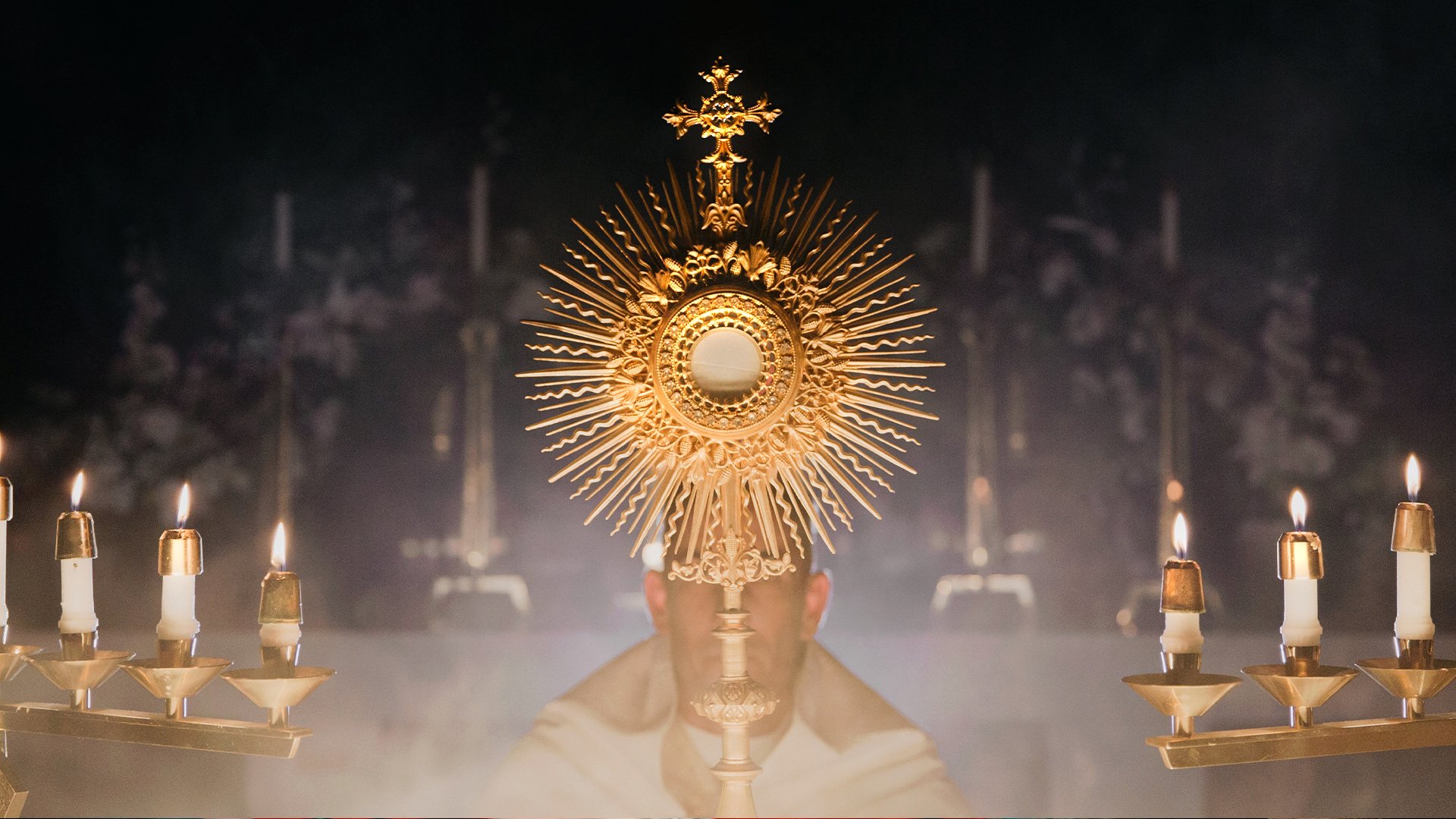

On the Feast of Corpus Christi, we confess and proclaim that God is present among us. God is close to us. He appears to us in forms, images, and things that are familiar to us. He is present to us in the form of bread. We experience God in a small peace of bread. True, for many people, God appears as bread.
After the institution narrative in the Eucharistic celebration, the priest or deacon says: “Mystery of faith.” In Latin, it is “Mysterium fidei.” Pope Paul VI wrote an encyclical entitled “Mysterium fidei” in 1965, inviting us to experience this mystery of the Eucharist more deeply. The congregation’s response to the confession hints at the mystery we will experience in the Eucharist. “We proclaim your death, O Lord, and we proclaim your resurrection until you come in glory” (cf. 1 Cor 11:26). This response from the congregation is a quotation from the Apostle Paul’s letter to the Corinthians, in which the Apostle Paul points out the importance of celebrating the Eucharist.
The Eucharist is a mystery. It is a mystery about the death and resurrection of Jesus. It is a mystery about God’s saving work and a mystery of God’s love for humanity. To enable us to experience this mystery more deeply, Jesus gave several signs. An important sign of this mystery of God was the bread. This Jesus showed first during the miracle of the multiplication of the loaves and fishes. Then there were several ovations in which Jesus made this mystery to experience for the people. The perfect and complete experience of this mystery was during the last supper. We reenact it in every Eucharistic celebration. This experience of the mystery of God made many people happy. We heard about this in the Gospel as people experienced it first time.
People’s first reaction to the multiplication of five loaves and two fish was special. Many marveled at the great deeds of God. The same thing happens in the Eucharist. It continues to happen every day. After every celebration of the Eucharist and the reception of the Body of Christ in Communion, we may rejoice in the special experience of God. In the holy Eucharist we experience Jesus’s closeness and admire him by praying and singing together.
Jesus fed many people with the multiplication of the loaves. At least for a evening they were happy. The message of the Eucharist is that we should work against all forms of hunger and thirst in the world. Through the multiplication of the loaves, thousands of people experienced a great sense of community through the shared meal. The joy of sharing is a great mystery. The celebration of the Eucharist, with or without a subsequent meal or gathering, is also an important opportunity for us today to experience and strengthen community. The mystery of joy and strength will create many miracles.
The people who were gathered together, ate bread that Jesus gave and witnessed Jesus’ miracles and placed their hope in Jesus. By participating in the holy Eucharist and receiving the holy Communion, we too place our hope in Jesus. We are convinced that with Jesus we can lay aside all our worries. We are convinced that we can hope in him. We know that with Jesus Christ we can find happiness.
This experience is a mystery of faith for the disciples of Jesus. This experience is a mystery of faith for us today. It is the mystery of the Eucharist. It is a mystery of the message of the miracles of the death, and the resurrection of Jesus. The Eucharist, death and resurrection of Jesus belong together. It is a mystery, the pascal mystery. It is God’s revelation through Jesus Christ.
But history shows that in just a few years, some Christians almost lost the meaning of this faith. Later many people abandoned the spirit of the Eucharist. They lost the meaning because the abandoned the spirit of communion and sharing that gave meaning to the Eucharist. Jesus was a man of community and a man of sharing. The sharing of a meal together and experiencing fellowship around the table was important in the Eucharist—not just a symbolic eating of the host, but a subsequent shared meal as the realization of the celebration in the service. People brought food and drink to the service, but everyone enjoyed their own food. The food of rich and poor was not of the same standard, and it wasn’t easy for people from different groups and circles to sit together at the same table. They came together in the name of Jesus Christ, but they wanted nothing to do with one another. That’s why Paul asks: “What you do when you meet together is no longer a celebration of the Lord’s Supper. For each one eats his own food at once, and one goes hungry, while another is already drunk.”
The communal celebration of the Eucharist, which we celebrate in remembrance of the passion, death, and resurrection of Jesus, and which recalls Jesus’ Last Supper, enables us to experience God’s saving work in the world and to experience God’s presence in the sign of bread and wine. Let the dignified celebration and the subsequent procession lead us to this experience of God.
Fr Joseph Pandiappallil MCBS