



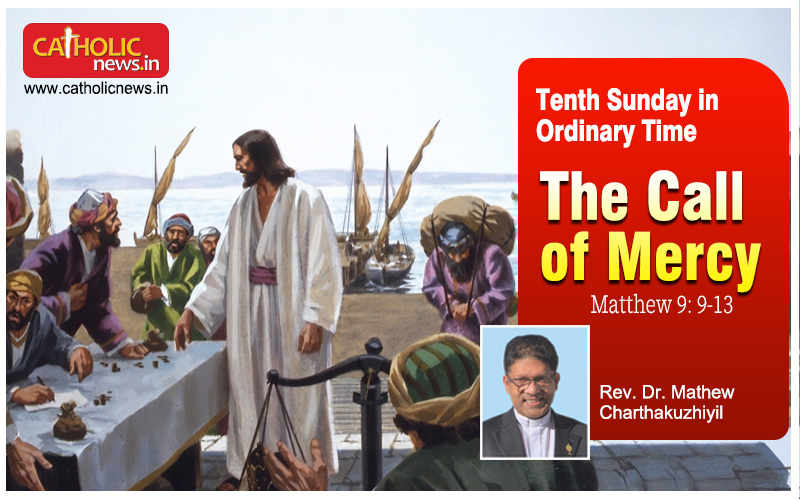
Today’s Gospel presents one of the most beautiful encounters in the life of Jesus. As he passes by, he sees Matthew sitting at his tax booth and says simply: “Follow me.” Matthew immediately gets up and follows him. This simple story reveals something extraordinary about the heart of God. Tax collectors were among the most disliked people in Jewish society. They were often considered dishonest, greedy, and collaborators with the Romans. Most people looked at Matthew and saw only his faults and failures. Jesus looked at him and saw a man capable of becoming a disciple and even an apostle. This Gospel reminds us that God sees not only what we are, but also what we can become through his grace and mercy.
Jesus does not stop with calling Matthew. He goes further and sits at table with Matthew and many other tax collectors and sinners. This scandalizes the Pharisees, who ask: “Why does your teacher eat with tax collectors and sinners?” In the culture of that time, sharing a meal was a sign of friendship and acceptance. Jesus was not approving of sin; rather, he was reaching out to those who needed healing. He says: “Those who are well do not need a physician, but the sick do.” Jesus presents himself as the divine physician who has come to heal wounded hearts. The Church is therefore not a museum for perfect people but a hospital for sinners. We come before God carrying wounds. Yet Christ never turns us away, but invites us closer.
The Gospel also challenges the way we often look at other people. We frequently judge by appearances. We quickly place people into categories: good or bad, worthy or unworthy, acceptable or unacceptable. We sometimes define people by their worst mistake. Jesus does the opposite. He sees the image of God hidden within every person. Many saints experienced this transforming mercy. St. Augustine spent years far from God before becoming one of the greatest teachers of the Church. St. Mary Magdalene carried a troubled past before becoming a faithful disciple. St. Peter denied Jesus three times and yet became the leader of the apostles. God’s mercy is greater than human weakness. Whenever we are tempted to judge others harshly, today’s Gospel invites us to look at them through Christ’s compassionate eyes.
The words of Jesus, “I desire mercy, not sacrifice,” are especially important. Religious practices must be accompanied by love and compassion. We can attend Mass regularly, pray faithfully, and fulfill our religious duties, yet still fail to show kindness to others. True faith changes the way we treat people. Mercy is expressed in practical ways: forgiving someone who has hurt us, being patient with a difficult family member, listening to a lonely person, helping someone in need, or giving a second chance to someone who has made mistakes. The measure of our discipleship is not only prayer but also love. God desires hearts that reflect his mercy daily.
Matthew’s story is also our story. Each of us has heard the voice of Christ saying, “Follow me.” The call may come through prayer, through a difficult experience, through another person, or through the quiet movements of grace in our hearts. Like Matthew, we are invited to leave behind whatever keeps us from God and to begin anew. The beautiful message of today’s Gospel is that no one is beyond the reach of God’s mercy. Christ still walks through the streets of our lives, looks at us with love, and calls us by name. May we have the courage to respond as Matthew did, rising from where we are and following the Lord with trust. And may our parish community become a place where all people experience the healing, welcome, and mercy of Christ.
Fr. Mathew Charthakuzhiyil