



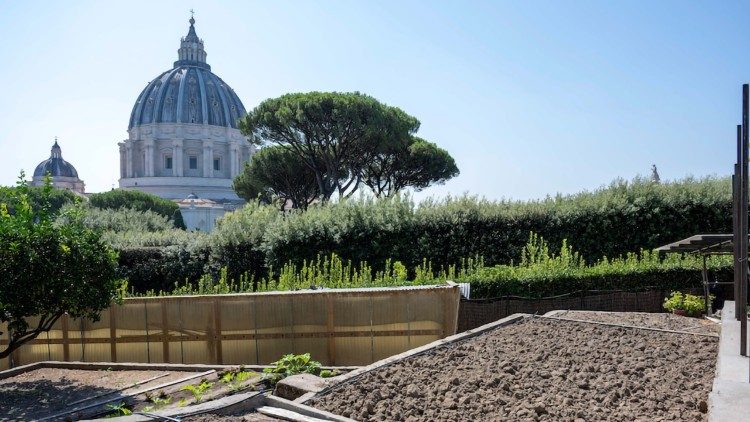
The historic vegetable garden next to the Mater Ecclesiae monastery in the Vatican Gardens has officially transitioned to 100% organic management. Rooted in the principles of Pope Francis’ landmark environmental encyclical Laudato si’, the initiative shifts the focus from maximizing agricultural yield to prioritizing soil health and honoring the natural growth cycles of plants. The approach reflects Pope Leo XIV’s recent call for agronomists to treat the earth not as a possession, but as a gift, framing sustainable cultivation as a concrete form of environmental stewardship for future generations.
Spanning nearly 400 square meters across four terraces, the garden’s daily care is overseen by the Vatican’s Gardens and Environment Service. Lead gardener Gilberto Bianchi works alongside young assistants and religious sisters, preserving centuries-old agricultural traditions while manually irrigating crops. Modern organic practices have replaced older methods; synthetic pesticides are eschewed in favor of pest management techniques, certified seasonal pelletized fertilizers, and natural soil fertility enhancements like crop rotation with nitrogen-fixing legumes. The team is currently experimenting with seaweed-based fertilizers and planning an on-site nursery and bonsai greenhouse.
The garden’s operations strictly follow a seasonal calendar, producing crops ranging from summer tomatoes, peppers, and rare chili varieties to winter brassicas and spinach. Notably, the plot houses 150-year-old heirloom citrus trees featuring rare grafted varieties. Grown completely chemical-free, the citrus peel is safely repurposed by the nuns to craft jams, candied fruit, and biscuits for guests and sale. A portion of the garden’s fresh yield also continues to support charitable outreach, including the Casa Dono di Maria hospice.
First established between 1277 and 1280 under Pope Nicholas III Orsini as an orchard and viridarium to feed the papal household, this small patch of land carries an 800-year history. Situated beside the monastery built under St. John Paul II—and later cherished as a walking path by Pope Emeritus Benedict XVI—the garden remains a living testament to monastic tradition, serving as a sanctuary where land stewardship and daily labor are woven directly into prayer.