



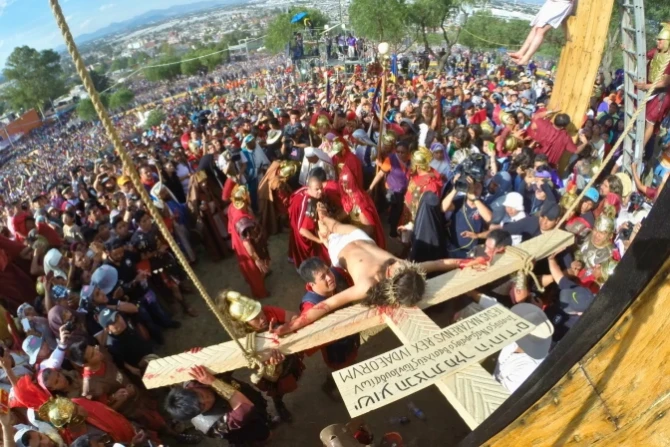
The centuries‑old reenactment of Christ’s Passion, death and resurrection that unfolds each Holy Week in the Iztapalapa district of Mexico City has been inscribed on UNESCO’s Representative List of the Intangible Cultural Heritage of Humanity. The decision was announced at a UNESCO meeting in New Delhi, India, after the nomination was reviewed and approved.
Edaly Quiroz, deputy director of Mexico’s National Institute of Anthropology and History, explained that the Iztapalapa Way of the Cross is more than a theatrical performance; it is a living expression of unity, faith and resilience that draws thousands into a collective act of memory and identity. UNESCO’s list highlights practices, knowledge and expressions that communities regard as essential to their cultural identity and that merit protection for future generations.
The tradition traces its origins to 1687, when an image of Christ being carried from Oaxaca to Mexico City became mysteriously immovable after resting in a cave on the Hill of the Star. A later cholera epidemic in 1833 prompted the community to carry the image in procession; when the disease ceased, the people vowed to reenact the Passion annually. Since then, the event has grown steadily, attracting roughly two million participants in 2025 alone.
Juan Pablo Serrano, custodian of the image of the Lord of the Little Cave in Iztapalapa Cathedral, expressed pride at the UNESCO designation, noting that the procession draws not only Catholics but also many who are not Catholic, offering them a moment of reflection and conversion. He emphasized that the new status brings a greater responsibility to preserve the celebration as an act of gratitude, catechesis and evangelization.
The Iztapalapa Holy Week has become a major cultural and religious event, drawing pilgrims from across Mexico and abroad. Its recognition by UNESCO underscores the importance of safeguarding such living traditions for the communities that cherish them and for the wider world.