



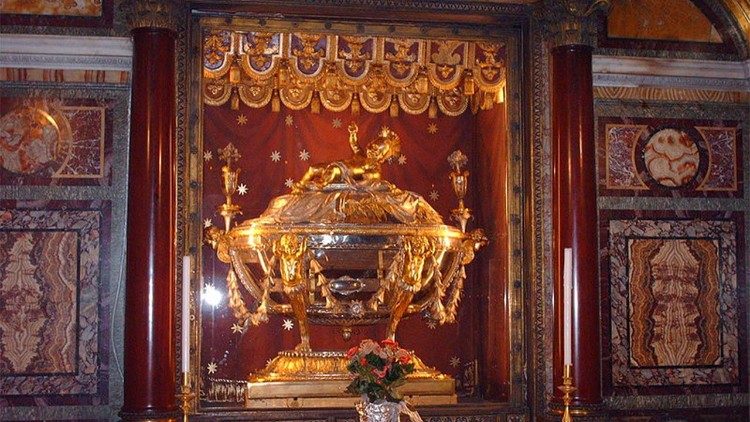
The relics of the Holy Crib—the wooden manger fragments in which Baby Jesus was laid at His birth—have been temporarily relocated within Rome’s Basilica of Saint Mary Major. Moved from their traditional location in the Confessio beneath the Papal Altar to a side chapel in the right nave, the relics are now accessible for up-close veneration, offering pilgrims a unique opportunity for quiet contemplation and intimate prayer.
This temporary relocation facilitates essential restoration work on the historic niche and reliquary, which no longer meet modern preservation standards. The upcoming upgrade will introduce a state-of-the-art case equipped with modern security, microclimate controls, and structural stability, seamlessly integrating into the Confessio’s architectural design. As part of the enhancement, artists will install a new blue mosaic backdrop crafted from golden tiles and vitreous enamels behind the Sacred Cradle to symbolize the night sky of the Nativity.
Comprising five thin sycamore wooden pieces, the sacred relics have long anchored the identity of Saint Mary Major, earning it the ancient title Santa Maria ad Praesepe (“Saint Mary near the Nativity Scene”). Devotion to the manger traces back to Saint Jerome in 4th-century Bethlehem. Over the centuries, the crib has inspired major artistic works, including Giuseppe Valadier’s 1802 Neoclassical cradle-shaped reliquary and Virginio Vespignani’s 1860s monumental Confessio, commissioned by Blessed Pius IX using nearly seventy varieties of ancient polychrome marble.