



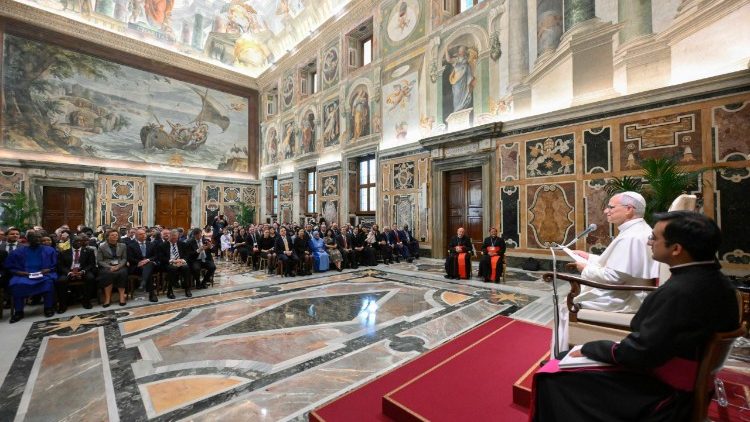
Addressing the International Catholic Legislators Network at the Vatican, Pope Leo XIV urged lawmakers to establish robust legal frameworks that guide scientific and technological creativity while safeguarding fundamental human rights. He stressed that regulation must preserve personal privacy, ensure algorithmic transparency, and shield citizens from digital exploitation. To ensure artificial intelligence serves democratic institutions and social justice, the Pope highlighted the need for independent oversight across local, national, and international levels so that no single ideology dictates embedded technological values.
The Holy Father also cautioned against new forms of technological dependence, warning that the rapid rise of AI risks fostering a form of ideological and economic colonialism that leaves poorer nations at the mercy of wealthier ones. He criticized subtle forms of digital domination where unaccountable algorithms control public visibility, digital platforms shape discourse without oversight, and the dignity of workers is subordinated to system optimization. Such trends, he noted, reflect an ancient human temptation to seek power and dominance rather than service.
To counter this dynamic, Pope Leo proposed a “civilization of love” centered around the family as the “first school of humanity.” He emphasized that within the family unit, individuals first learn essential virtues such as trust, generosity, dialogue, and love before facing calculation, competition, and power. Consequently, he called on legislators to ensure AI is never allowed to erode this core foundation of society—whether by flattening human relationships into data simulations, exposing youth to content that distorts desire, or reinforcing economic models that make family life precarious.