



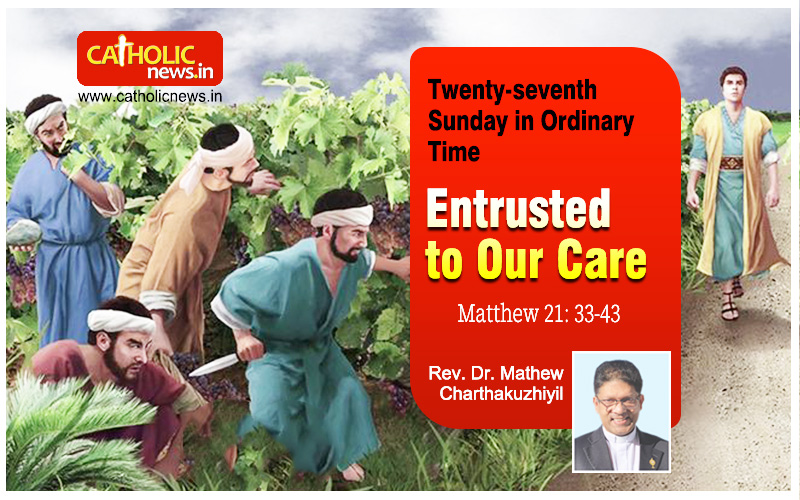
Today’s Gospel invites us to reflect on the gifts God has entrusted to us and the fruit he hopes they will bear. Jesus tells the parable of tenants who are given a vineyard to cultivate, but gradually treat it as their own possession. When the landowner sends servants to collect his produce, they answer with violence. Finally, they kill his son, hoping to seize the inheritance. Speaking to the chief priests and elders, Jesus recalls the rejected prophets and points towards his own death. His parable also invites us to look honestly at our lives. We have received so much: love, time, abilities, and opportunities. When God comes looking for the harvest, will he find gifts carefully guarded or blessings generously shared with those around us?
The tenants’ first mistake happens before they raise a hand against anyone: they turn a gift into a possession. We recognise that temptation. We speak of my money, my time, my achievements, even my parish, as though everything begins and ends with us. Certainly, we work hard and carry real responsibilities. Yet who gave us life, the people who nurtured us, or the earth that sustains us? Gratitude changes the way we hold these gifts. We should be willing to share our gifts with those who are in need. Christian stewardship begins with that open hand. Our families, talents, opportunities, and responsibilities become places where God’s generosity can reach others through us. Each morning offers another chance to practise this generosity in something small.
What is most astonishing in the parable is the owner’s patience. He sends more servants, then his own son. We might have given up much earlier. Here Jesus reveals something of God’s persistent love. How often has God approached us through a troubling conscience, a challenging Gospel, or someone brave enough to tell us the truth? Sometimes his messenger is a person whose need interrupts our plans. Do we listen, or push the message away? God’s patience gives us room to repent; it does not make our choices unimportant. The sending of the son reveals the cost of this love. As Saint John teaches, God gives his Son for the world’s salvation. Jesus is rejected and crucified, yet rises again: the rejected stone becomes the cornerstone of a new beginning.
What, then, does a fruitful vineyard look like? Often, it looks remarkably ordinary. It is a father putting down his phone to listen to his child, a neighbour knocking on a lonely person’s door, or someone saying, “I was wrong; please forgive me.” It is an employer paying fairly and a young person refusing to join in cruel laughter. Our care must also reach the earth that nourishes us. Food wasted, water polluted, and resources consumed carelessly affect other people, especially those with least protection. Creation is entrusted to our care, with a harvest to be shared. When we use things thoughtfully and treat people tenderly, gratitude becomes visible. The vineyard grows through such choices, repeated patiently, even when nobody notices or applauds us.
Today, let us walk quietly through our own vineyard. Where has resentment taken root? Which relationship needs attention? What gift lies unused because we are afraid or too comfortable? These questions invite us to begin again. Perhaps we can make one telephone call, offer one apology, share one meal, or change one wasteful habit. Small acts of faithfulness prepare the ground for greater love. At this Eucharist, we receive the very One whom the tenants rejected. Let us welcome him into the parts of our lives we prefer to keep locked. The vineyard is his gift; our loving response is its precious harvest. May he teach us to receive gratefully, care faithfully, and share generously, until our lives bear a harvest of justice, mercy, and peace.
Fr. Mathew Charthakuzhiyil