



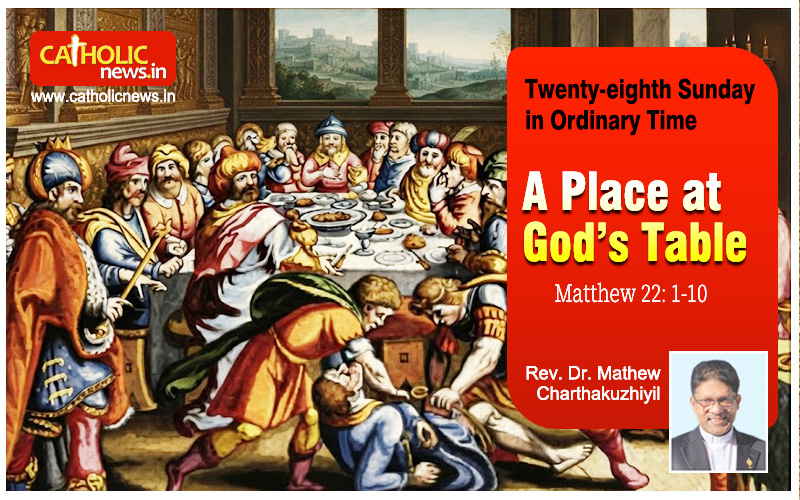
Today’s Gospel presents the Kingdom of Heaven as a wedding banquet. God invites us into the joy of his Son, offering us a place at his table. Yet the first guests refuse to come. Some are occupied with their farms and businesses; others respond with hostility, even killing the servants. The king then sends his servants into the streets to gather everyone they can find. Both the good and the bad enter, and the hall fills with guests. This invitation raises a question for each of us: when God makes room for us, do we make room for him? We may welcome an invitation from someone important with excitement. Yet God’s invitation can remain unanswered because we imagine that something else must always come first. The banquet is ready, and the host longs for our company. Will we accept his invitation?
The excuses in the parable are unsettling because they sound familiar. A farm needs attention; a business demands work. These responsibilities are not wrong in themselves. The difficulty comes when they occupy so much of our hearts that we have no time for God or one another. We can spend a whole day answering messages while leaving a loved one’s concern unheard. We can plan everything carefully except a moment for prayer. Gradually, the urgent crowds out the essential. Jesus asks us to examine our priorities without despising our daily duties. A relationship needs our presence to grow. God’s invitation calls us to pause, listen, and receive his love. What might we need to put aside this week so that our hearts become more available to him?
There is also violence and judgment in this parable. The rejection of the king’s invitation becomes a rejection of his messengers, reminding us that refusing God’s call can have serious consequences. Yet the story moves towards a remarkable welcome: the servants gather everyone they find, good and bad alike. Nobody earns an invitation by presenting a perfect record. We come because God is generous and we need his mercy. We bring our disappointments, failures, and wounded relationships. Accepting his invitation means allowing him to heal and change us. Mercy opens the door to a new life, and our response begins with trust and repentance.
Today, this invitation reaches us through the Eucharist. We gather around the Lord’s table, hear his word, and receive the gift of Christ himself. The celebration draws us into his sacrifice and gives us a foretaste of the heavenly banquet. Sometimes we arrive distracted or tired, wondering whether we have anything worthwhile to offer. We can begin simply by placing ourselves before him honestly. Our presence becomes a prayer: Lord, I need you; help me to receive your love. But sharing this meal also changes how we see those beside us. The person we find difficult is someone God invites. The stranger belongs within the reach of his welcome. Communion with Christ calls us towards reconciliation, generosity, and a deeper concern for the needs of others.
The servants are sent into the streets, and the Church receives that same outward mission. We cannot remain comfortable while people nearby feel forgotten, unwanted, or beyond forgiveness. Someone may be waiting for a visit, an invitation to Mass, a patient conversation, or practical help. We carry God’s welcome when we approach such people with humility, respecting their freedom and listening to their stories. Let us accept the invitation ourselves and help someone else discover it. We must find time for prayer or share a meal with someone lonely. As we celebrate this Eucharist, may our friendship with Jesus be renewed. May his mercy soften our hearts, enlarge our table, and teach us to make room for others with the generosity we have received.
Fr. Mathew Charthakuzhiyil