



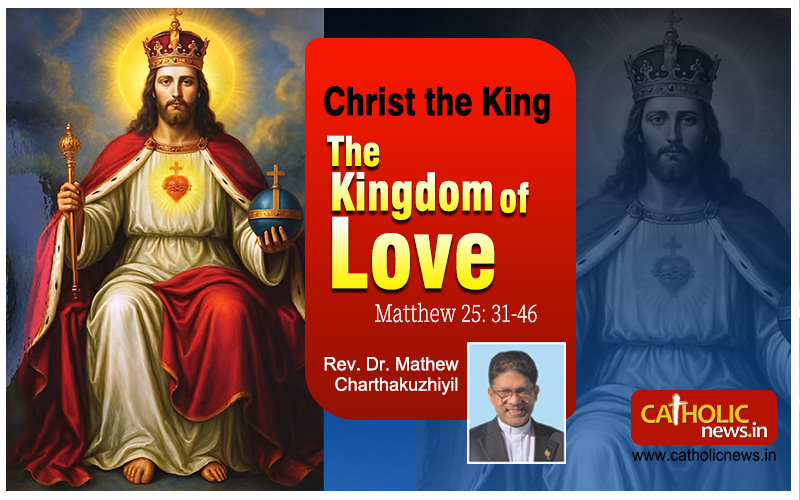
Today, on the Solemnity of Christ the King, we come to the end of the liturgical year. We celebrate Jesus as King of the Universe, but his kingship is unlike the power we usually admire. Earthly kings have worn golden crowns, lived in palaces, and commanded armies. Jesus was born in a stable, walked among ordinary people, and died wearing a crown of thorns. His throne was the cross. He did not come to conquer nations but to win human hearts through love. As another liturgical year ends, the Church asks us a simple question: Who is really the king of my life? We may call Jesus our King with our lips, but do our choices show that he reigns in our hearts?
In today’s Gospel, Jesus gives us a striking picture of the final judgement. The Son of Man comes in glory and separates people as a shepherd separates sheep from goats. We might expect the King to ask about great achievements, public honours, or religious knowledge. Instead, he speaks about ordinary acts of mercy: feeding the hungry, welcoming strangers, clothing the naked, and visiting the sick and imprisoned. Both groups are surprised. They did not know that the person in need was an encounter with Christ himself. Jesus says, “Whatever you did for one of the least of these brothers and sisters of mine, you did for me.” The King who will judge the world is the same Lord who quietly meets us in those who suffer.
Our modern world has many competing kings. We admire successful people, follow celebrities, trust powerful leaders, and allow money, technology, and social media to shape our desires. These things can serve good purposes, but they cannot give our lives their deepest meaning. Sometimes we become so concerned about recognition, comfort, or having the last word that the teachings of Jesus begin to seem inconvenient. We may defend our opinions more passionately than we practise forgiveness. We may spend hours looking at screens but struggle to find a few minutes for prayer or for someone who needs us. Christ the King challenges this quiet change of loyalties. The question is not whether we use modern opportunities, but whether we let them rule us. A Christian is free when love, rather than pride or fear, guides the heart.
There is something particularly challenging about the people who stand on the King’s left in the Gospel. Jesus does not describe them as people who committed spectacular acts of cruelty. They failed to notice and respond. They passed by the hungry, the stranger, and the lonely without offering help. This can happen in our own villages and families. An elderly neighbour may spend days without a visitor. A family may be worried about paying its bills. A person sitting beside us at Mass may be carrying grief that nobody sees. We cannot meet every need, but we can begin with the person before us. A shared meal, a patient conversation, or a small act of generosity may seem insignificant. Yet Jesus tells us that love offered to another person reaches him.
As we celebrate Christ the King, let us imagine preparing our homes for a royal visitor. We would clean the rooms, arrange everything carefully, and make sure the guest felt welcome. But Jesus asks for a different preparation. He wants a place in our decisions, our relationships, and our treatment of those who have little to offer us in return. His kingdom grows whenever we forgive, share, welcome, and serve. At the end of our lives, we will not carry our possessions or titles into his presence. What will remain is the love we have given. May our parish become a place where nobody is forgotten and where the dignity of every person is respected. Then may we hear the King’s invitation: “Come, you who are blessed by my Father.”
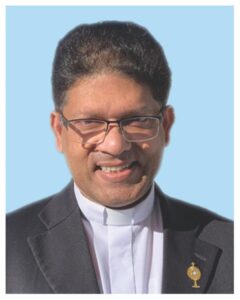
Fr. Mathew Charthakuzhiyil