



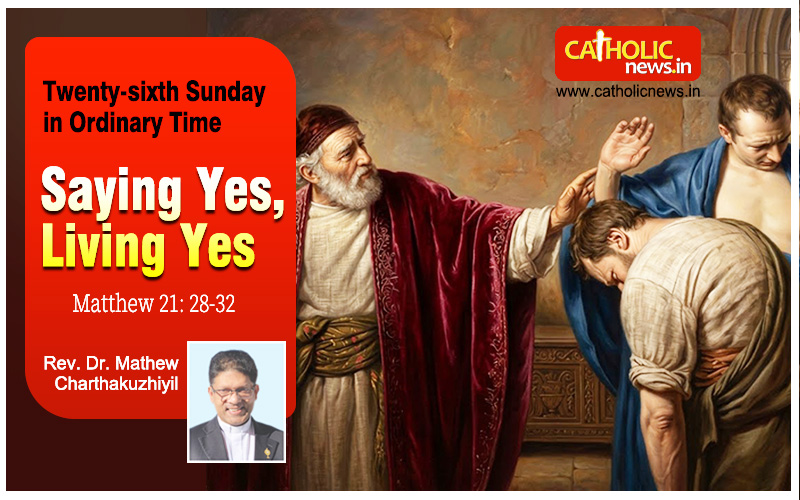
In today’s Gospel, Jesus tells us a parable of two sons sent by their father to work in his vineyard. The people of Israel had a long history of cultivating vines, and wine played a significant role in their lives. In the Old Testament, the vine is listed among the seven agricultural blessings of the promised land (Deut. 8:8). A vineyard needed patient attention and faithful work to produce a good harvest. Family life, too, called for responsibility and respect. “Honour your father and your mother” is the fourth commandment, and honouring parents was understood as part of honouring God. A son’s deliberate refusal would therefore have shocked Jesus’ listeners. Here,Jesus invites us to consider how we respond when our heavenly Father asks something of us.
In this parable, the first son responded negatively to his father’s request but acted positively. He said, “I will not go,” but afterwards he repented and went. The second son responded positively but acted negatively. He said, “I go, sir,” but did not go. At the end of the story, Jesus asks his listeners which son did the father’s will. The chief priests and elders rightly answer: the first. The message becomes clear: our words must bear fruit in deeds of conversion and faith. By answering correctly, these leaders exposed the contradiction in their own lives. Yet the first son also gives us hope. An initial refusal need not become our final answer. God gives us the opportunity to reconsider, repent, and begin again. Even when we have delayed for years, his invitation still reaches us today, asking for a willing and generous heart.
Jesus directs this story towards the religious leaders who were questioning his authority. Although they had said “yes” to God, their actions failed to express that commitment. They had not believed John the Baptist’s message, and they resisted Jesus. He tells them that tax collectors and prostitutes are entering God’s kingdom before them (Mt. 21:31). These people, whose lives had been marked by sin, believed John and responded to his call to repentance. Their past did not prevent them from receiving God’s mercy. This challenges us to examine how we judge others. We may notice someone’s mistakes while overlooking the quiet beginnings of conversion. We may also become so satisfied with our own religious practice that we stop asking where God is calling us to change.
The story also invites us to look beyond the two sons towards Jesus himself. We might speak of a “third son,” although he is not a character within the parable. The first son says “no” but does his father’s will. The second says “yes” but fails to act. Jesus says “yes” to the Father and faithfully fulfils his will, even by giving his life for us. Our real model is Jesus Christ, whose love and obedience belong together. We should say “yes” to God daily and follow him with our words and deeds. Through prayer and the Eucharist, we receive strength to live that response. Christ helps us remain faithful when forgiveness is difficult or doing what is right costs us something.
My dear sisters and brothers in Christ, this message is directed to us. In baptism, we were committed to following God’s ways, and we renew that commitment throughout our Christian lives. Now we need to open our hearts and minds so that God can work in us. Our relationship with Jesus enables us to grow as children of God. Let us earnestly fulfil the promises we have made to him. This week, let us choose one promise and put it into practice: visit someone lonely, offer an apology, or help a person in need. The Father’s vineyard is close at hand, in our homes, parish, and daily responsibilities. Let us imitate Jesus so that God’s name is glorified in everything we do and say.
Fr. Mathew Charthakuzhiyil