



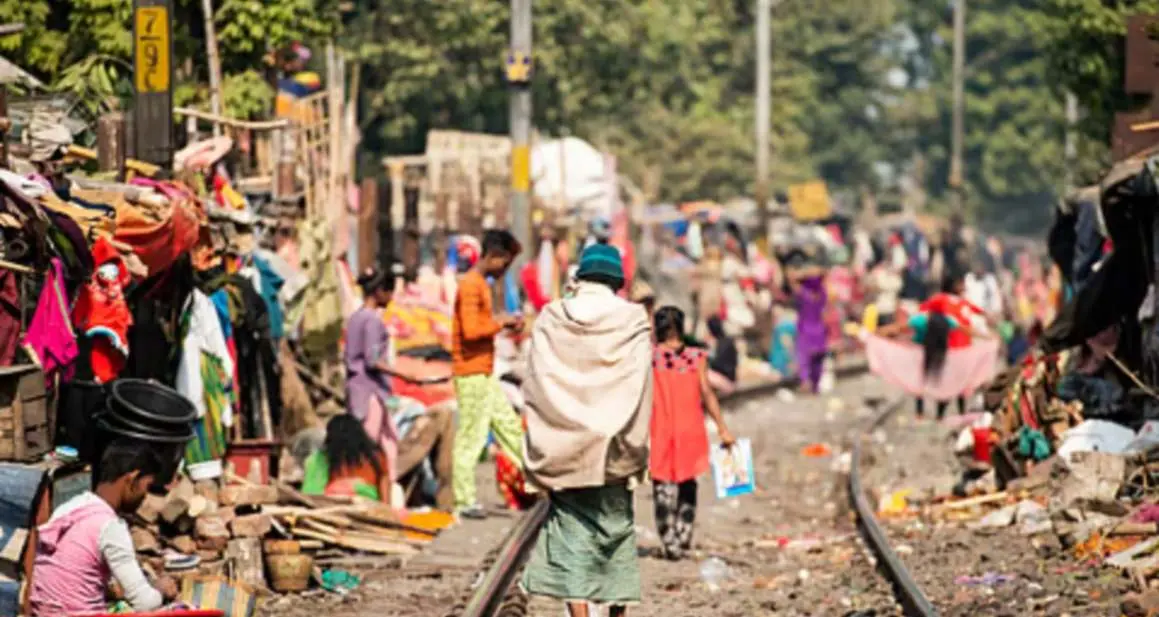
A glittering ceremony was held in the state capital recently to declare Kerala as India’s first “extreme poverty-free state.” The announcement, celebrating the success of the state’s anti-poverty initiatives, was presented as a historic milestone. Yet, it has also triggered strong criticism from the opposition, economists, and social observers who view it as a politically motivated claim ahead of elections. Some even warn that such proclamations could jeopardize future central funding.
Many have rightly pointed out that there are still pockets within the state—particularly in remote tribal areas and backward regions—where basic infrastructure remains a dream. But there is another large, invisible section of people who rarely find a place in these discussions. Their lives stand as a profound question mark against the very idea of Kerala’s “freedom from extreme poverty.”
The Destitute and the Denied Pensions
Thousands of men and women in Kerala—elderly, chronically ill, or physically and mentally challenged—live without family, without a home, and without anyone to care for them. They survive only because of the compassion of charitable individuals or institutions. Without such support, many of them would be left on the streets, or worse, would have died of hunger and neglect. These are the the destitute.
According to the eligibility criteria set by the government itself, they are among those who most deserve social welfare pensions. Yet, for around sixty thousand such inmates living in various destitute homes across Kerala, the pension remains frozen since August 2021.
It was the State Finance Department that stopped these payments, overruling a 2016 order of the Social Welfare Department which had specifically included such residents under the welfare pension scheme. Despite numerous appeals over the years, the government has shown no willingness to review or reinstate the decision.
The official justification is peculiar: since these homes receive Grant-in-Aid from the government, their residents are not eligible for welfare pensions. The so-called “grant” is a meagre ₹1,100 per inmate—an amount that has not been revised for over eight years. Moreover, only a fraction of the institutions actually receive it. Many homes have not been sanctioned any grant at all, while several others are still waiting for the 2023–24 installment.
Effectively, this means that the vast majority of destitute inmates—those most in need of state support—have been entirely excluded from even the minimal social safety net.
Grant-in-Aid vs Welfare Pension: A False Comparison
Equating the institutional grant with the personal welfare pension is both illogical and unjust.
A welfare pension is meant as direct financial assistance to an individual — an entitlement recognising their personal vulnerability and social insecurity.
A Grant-in-Aid, on the other hand, is a limited operational support to an institution that provides food, shelter, and care for such people. The ₹1,100 per inmate currently offered by the state does not even begin to cover the basic costs of food, medicine, or clothing.
For comparison, the government spends nearly ₹10,000 per month on inmates in state-run welfare institutions — excluding staff salaries and administrative expenses. Seen against that figure, the grant for private charitable homes is not merely inadequate; it is symbolic.
In this context, the Finance Department’s decision to withdraw pensions—citing the existence of such grants—is not just unreasonable, it is morally indefensible.
A Responsibility the State Cannot Abdicate
The state cannot absolve itself of responsibility toward its most helpless citizens — the elderly, the abandoned, the sick, the disabled, and the orphaned. The constitutional and moral duty to protect them ultimately rests with the government, not with charity alone.
Kerala has nearly two thousand recognised welfare institutions under the Orphanage Control Board. The people who run them — most of them volunteers or faith-based organisations — carry out an enormous social responsibility that the state itself has failed to shoulder. Instead of supporting and strengthening their efforts, the government has often turned away from their legitimate demands for fair financial assistance.
This neglect is both systemic and silent. It affects those who have no trade unions, no political affiliations, and no capacity to take to the streets in protest. The very people who are the weakest — socially, economically, and physically — are punished for their invisibility.
A Measure of True Poverty Eradication
If Kerala truly aims to become an “extreme poverty-free state,” it cannot exclude these sixty thousand destitute citizens from its definition of poverty. The government must not only restore their welfare pensions but also revise the outdated and tokenistic Grant-in-Aid system.
Furthermore, it must extend proper financial and administrative support to the hundreds of institutions that continue to serve these forgotten lives with compassion and commitment.
Only when the most neglected and voiceless are included in the circle of state concern can the dream of poverty eradication have any real meaning. Otherwise, “freedom from extreme poverty” will remain little more than a celebration of statistics.
Vinod Nellackal