


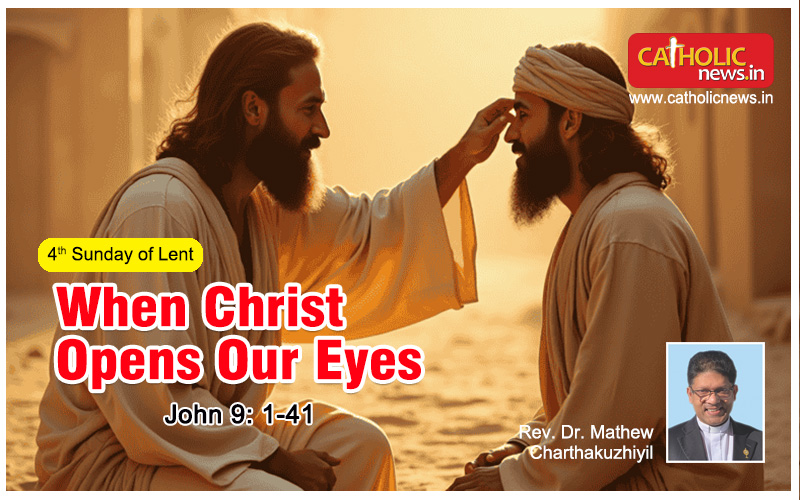
The Gospel of the man born blind is not only a story about physical healing; it is a revelation about spiritual sight. Jesus sees a man who has never known light. The disciples immediately ask, “Who sinned, this man or his parents?” They look for blame. Jesus looks for grace. “Neither he nor his parents sinned; it is so that the works of God might be made visible through him.” From the beginning, Jesus shifts the focus from guilt to glory. Suffering is not always a punishment; sometimes it becomes the place where God’s power and mercy are revealed. Then Jesus makes mud with his saliva, spreads it on the man’s eyes, and tells him to wash in the pool of Siloam. The man obeys, washes, and returns able to see. Light enters his life for the first time.
This miracle is rich in meaning. The mud reminds us of creation, when God formed man from the dust of the earth. Here, Jesus acts with the authority of the Creator, bringing new sight to what was blind. The washing in Siloam points toward baptism — the washing that opens our eyes to faith. The man does not argue or analyze; he simply trusts and obeys. His obedience leads to transformation. Faith often begins in this simple way: listening to the word of Christ and acting on it. The real miracle in this Gospel, however, is not only that a blind man sees, but that a man grows in faith while others grow in blindness.
After the healing, controversy begins. The neighbors are confused. The Pharisees investigate. Instead of rejoicing, they question, accuse, and judge because the healing happened on the Sabbath. They are so certain of their own understanding that they cannot recognize God’s work before their eyes. Meanwhile, the healed man’s faith develops step by step. At first, he calls Jesus “the man called Jesus.” Then he says, “He is a prophet.” Later he declares, “If this man were not from God, he would not be able to do anything.” Finally, when Jesus reveals himself as the Son of Man, the man responds, “I do believe, Lord,” and he worships him. His physical sight leads to spiritual sight. The Pharisees, who claim to see clearly, remain blind because they refuse to believe.
This Gospel challenges us personally. Where are we blind? Sometimes we are blind to our own weaknesses, blind to the needs of others, blind to the quiet ways God is acting in our lives. Like the disciples, we may look for someone to blame instead of asking how God might work through a situation. Spiritual blindness often comes from pride — the certainty that we already know, that we already see. The healed man, by contrast, is humble. He admits what he does not know, but he holds firmly to what he has experienced: “One thing I do know is that I was blind and now I see.” His testimony is simple, honest, and powerful. Faith does not require having all the answers; it requires trusting the One who gives light.
During Lent, this Gospel invites us to step into the light. Christ says, “I am the light of the world.” Light reveals, heals, and guides. Perhaps the Lord is placing mud on our eyes in some way — allowing experiences that humble us, disturb us, or challenge us. These moments can become opportunities for deeper sight if we allow ourselves to be led to the waters of grace. Through prayer, confession, and the Eucharist, Christ continues to open our eyes. May we have the courage of the man born blind: to obey, to witness, and finally to kneel before Jesus in faith. Then we too will be able to say with gratitude and conviction, “I was blind, and now I see.”
Fr. Mathew Charthakuzhiyil