



Introduction
The One, Holy, Catholic and Apostolic Church (Sancta Mater Ecclesia) understood as a ‘communion of Churches’ is an important re-discovery of Vatican II for a renewed understanding of the Catholic Church. This ecumenical council re-discovered the rich theological heritage of the early Church, namely, unity in diversity, which admits ample space for promoting the beauty of different ecclesial traditions and the consequent need for due respect for different cultures. The communion of the different ecclesial traditions forms the Catholic Church and she has no concrete existence outside this communion. Holy Father Pope Francis recently reminded: “…. it is most helpful that each part of the one and symphonic Catholic Church always listens attentively to the other traditions, their itineraries of research and of reform, while preserving its own uniqueness. Fidelity to uniqueness is what created the symphonic richness of the Eastern Churches”.[1]
- Theological Complementarity between the East and the West
The various theological formulations of East and West are to be considered complementary, contributing to a richer understanding of revelation.[2] As St. John Paul II reminds us, the Church of Christ breathes with two lungs, the lung of the East and the lung of the West, but pulsating with one heart with the love of Christ. [3] Modern studies go a step further. As Sebastian Brock, an eminent scholar of this century in Syriac patristic studies, comments, unlike human beings, the Church is endowed, not just with two lungs but with a third lung as well, from which also she needs to learn to breathe once again.[4] S. Brock in his innumerable and valuable studies has always been keenly insistent on the relevance of a ‘tripartite approach to Christian theology’ and on the beauty of drawing from the three equally important streams of Christian tradition in the pattern of the trinity- the Syriac Orient, the Greek East and the Latin West. This tripartite approach to theology has now become well-accepted among Catholic theologians. It is an ardent desire of the Church that her ‘Catholic’ character shall be visibly manifested at all levels of her life and teachings.
The East has always understood revelation in its original context with its scriptural simplicity and authenticity, together with great esteem for the ‘living tradition of the Church’, handed down through the teachings of the fathers and liturgical worship. The West, on the other hand, with its rich scholastic theology, backed with the philosophical heritage of the Greco-Roman philosophy, understood revelation in rational categories. Thus, there gradually arose an ‘academic and rational’ theology of professional character with its definitions in pursuit of precise formulations.[5]
The East is mystical rather than methodological. The observation of A. Miklósházy is noteworthy: “Oriental Christianity is much more a life experience than a doctrinal system. We may perhaps miss a logical systematisation in its theology but we must stand in wonder before the richness of its prayerful, reverential, often deeply penetrating insights that a rationalist mind is not able to discover”.[6] As J. Meyendorff comments, the East was less prone than the West to compartmentalise or to dogmatise the unity of tradition. It preferred to maintain its faithfulness to the mind of Christ through the liturgy of the Church, through the tradition of holiness and living gnosis of truth in a free effort of love that comes from a continuous communion with the Holy Spirit, who dwells in the Church.[7]
The Oriental heritage is not just liturgy alone but also an ethos, a genius and a way of living. The spiritual, cultural, theological and canonical treasures also form an integral part of the Oriental patrimony. According to R. Taft observes, “an Oriental rite is not just a different way of saying mass. It is a special faith patrimony with its own feasts and fasts, saints and shrines. It is another genius and temperament, an Oriental ethos from which the various ritual and devotional differences flow”.[8] As F. Nikolasch observes: “If it is found that the Eastern Churches differ in many respects from those of the Western Churches, we should not, for that reason, conclude that their position is less Catholic, for, also the Eastern Churches appeal to the apostolic tradition with as much right as the Latin Church”.[9] In the words of John Paul II, ‘knowing the Christian East is itself an experience of faith’ (OL, 5-16).
2. Mutual Appreciation of Different Ecclesial Traditions
The Church of Christ belongs to the East as well as to the West.[10] The Eastern and Western traditions contribute equally to the universal patrimony of the Church. The venerable traditions of the Eastern Churches are an integral part of the undivided heritage of Christ’s Church. It is a brilliant ornament that ever adorns the Church of Christ. The rich diversity in the cultural, ecclesial and liturgical traditions naturally demands their proper recognition and appreciation in the communion of Churches. The magisterium of the Church has been consistent in its teachings on the equality and mutual complementarity of the different ecclesial traditions in the one Church of Christ.[11]
The magisterial teachings clearly affirm that the East has its own way of doing theology and a specific understanding of Christian life in its different dimensions. The Christian East has its own way of theological thinking, patrimony, discipline, genius and temperament. The spiritual message of the East has an ever new and irreplaceable relevance.[12] The Catholic Church envisages that her faithful may possess a clear understanding of the legitimate unity and diversity in the Church. The Eastern rites together with the Western rites, manifest the glory of God’s Church and provide Western Catholics with a deeper appreciation of their own traditions.[13]
- The Syro Malabar Church, a Flourishing Oriental Church
Being a flourishing Oriental Church in the Catholic communion of Churches., the Syro Malabar Church belongs to the St. Thomas Christian tradition.[14] The St. Thomas Christian tradition traces its origin to St. Thomas the Apostle (+AD 72), who preached the Gospel in India. These Christians faithfully preserved, heroically lived and integrally handed over the faith, which they had received from the apostle St. Thomas.[15] The historical vicissitudes of this Church are also very unique. This ancient Christian community preserved intact the legacy and orthodoxy of the apostolic faith and has always been in the ecclesial communion with the Church of Rome.[16]
This ancient Christian tradition in turn belongs to the East Syriac tradition, which grew and developed in the Persian empire outside of the Roman empire and is one of the six basic ecclesial traditions in the Catholic communion of Churches.[17] It has now fifty lakhs faithful in 35 eparchies across the globe, 31 eparchies in India and four eparchies abroad, namely the eparchies of Chicago for the whole of the United States of America, Melbourne for the whole of Oceania, Great Britain for the entire United Kingdom and Mississauga for the whole of Canada and one apostolic visitation in Europe.[18] This vibrant Oriental Church has now grown to the level of an all India and globally present Church. Thanks be to the historical visit of Cardinal Eugene Tisserant, a great luminary for the Oriental Churches and specially to the Syro Malabar Church, who prophetically and generously assisted her to open her doors wide for the growth and development from a Church, limited to the Malabar coast to the present national and global level.[19]
- Mar Thomma Margam: The Ecclesial Identity of the Syro Malabar Church
Christian faith is a ‘way of life’ (Acts 2, 41-47; 9, 2; 11, 26; 19, 9; 22, 4; 24, 2).[20] As Vatican II clearly teaches, the Church of Christ is blessed with different ‘ordering of Christian life’, ‘way of life’, ‘spiritual heritage’, ‘spiritual tradition’ and ‘spiritual patrimony’ (LG, 23; OE, 1-6). Eastern Code of Canon Law also clearly says: “A rite is the liturgical, theological, spiritual and disciplinary patrimony, culture and circumstance of history of a distinct people by which its own manner of living the faith (modus fidei vivendae) is manifested in each Church sui iuris (can. 28).
The St. Thomas Christians have a unique ‘way of Christian living’, founded on the Christ experience of Apostle St. Thomas, which he shared in the Indian cultural context. It is actually our life in Christ Jesus, who is “the Way, the Truth and the Life” (Jn, 14, 6). More than a set of concepts or principles, it is a way of life (margam), a way of purity and sanctity,[21] which was first made known to India by Mar Thoma. Hence is the designation ‘Mar Thoma Margam’ (Mar Thommayude Margavum Vazhipadum).
St. Thomas Christians live the Gospel values and its moral teaching in the context of their unique faith patrimony and the Indian culture. As Paremakkal Thomma Kathanar in its introductory lines of The Varthamanappustahkam[22] observes, “By the infinite mercy of God and by the merits of the apostle St. Thomas, its first apostle and founder, our community has until now followed faithfully as far as it could, the customs and the rite of our forefathers, who confessed the name of God and suffered much for the same in the midst of pagans and other peoples”.[23] Thus Mar Thoma Margam stands for the sum total of the ecclesial and moral life of the St. Thomas Christians, who have a unique way of moral living, founded on the Christ experience of the Apostle St Thomas, which he shared in the Indian cultural context and ethos.[24] As P. Kochappilly comments, it is the confluence of the karma marga (Jn. 11), the Jnana marga (Jn. 14) and Bhakti marga (Jn. 20) of St. Thomas that he shared with the people of India.[25] It is a way of courage (Jn, 11, 16), a way of nebulousness and clarity (Jn. 14, 5-6), a way of incredulity and total commitment (Jn. 20, 24-28), a way of great missionary zeal and a way of suffering and martyrdom.
The ‘Way/Law of St. Thomas’ includes the sum total of their faith heritage, the apostolic patrimony, divine liturgy, sacraments, divine office, popular devotions, liturgical language and heritage, theological understanding, spiritual life, moral life style, Church discipline, ecclesiastical government, local traditions, life contexts and socio-religious customs as well. In other words, it is the whole ecclesial, spiritual, moral and socio-cultural modus fidei vivendae of the Thomas Christians. G. Nedungatt, speaking about the spirituality of the Syro-Malabar Church, sees the Law of St. Thomas as one of the fundamental characteristics and traits of her spirituality, which stands for the whole ethos of Church life.[26] B. Petrà sees in this law of St. Thomas, the centre of the socio-cultural identity and religious ethos of the Syro Malabar Church. He observes: “It is in this ‘law’ that the Syro-Malabar Church seems to have her true ethos, that which can renew her identity in the present and open her to a significant future in the communion of Churches”.[27]
A remarkable feature of this Mar Thoma Margam is that it is thoroughly Christian and Oriental as well as adapted to the socio-cultural life of India. Placid J. Podipara, a great theologian and luminary of the Syro Malabar Church says: “The St. Thomas Christians were Hindu in culture, Christian in faith and oriental in worship”.[28] This well-known adage expresses clearly the nature of the ecclesial life style and the Indo-Oriental identity of the St. Thomas Christians, well symbolised in the St. Thomas Cross.
However, the argument of C. D. Sebastian is noteworthy and relevant here. He clearly argues, the term ‘Hindu’ in Placid Podipara’s context had an altogether different nuance and connotation from the term ‘Hindu’ that is being used today in the common parlance in the changed context and has become unfitting to call the Thomas Christian culture as ‘Hindu’. Therefore, he affirms that it must be re-read as ‘Indian’ because the contribution of Judeo-Christian and non-Hindu facets is much more than that of Hinduism.[29] The time has now come to reword and rephrase this famous adage, incorporating the different local cultures of the different nations, for example, Indo-American, Indo-Canadian, Indo-Britain, Indo Australian/Indo-Kiwi/Indo-Oceania, Indo-Gulf, Indo – Singapore, Indo- African, etc. We need to be adapted to the local cultures, languages, life styles, way of dressing, music, both sacred and secular, Church art and architecture, translations of the liturgical texts and catechism text books, adaptation in the performative arts, dances, etc.
- Different Dimensions of Mar Thomma Margam
As already well explained, Mar Thoma Margam is the sum total of the faith and life of the St. Thomas Christians of India, expressed in and through different aspects.
5.1. Unique Christ Experience of St. Thomas the Apostle
Syro Malabar Church is an apostolic Church and has St. Thomas as the apostle. This is the only Church known in the name of Jesus of Nazareth and an apostle, Mar Thoma Nazranies. This Church has an apostolic patrimony and ecclesial identity that goes back to the first half of the first century. The mission and apostolate of St. Thomas in India is an accepted fact and we have enough testimonies for the Indian apostolate and martyrdom of St. Thomas. As J. Kurukilamkatt observes, “however hard the foreign historiographers try to disprove the mission of Thomas to India, Thomas remains and will remain in the hearts of the Christians of India as their apostle and they themselves are the solid proof for the coming of the apostle to India”.[30] St. Thomas touched the wounds in the glorified body of the risen Lord (Jn. 20, 24-28). This unique Christ experience prompted him to become a zealous missionary and later a martyr for Christ and his Gospel. It is the kernel and touching stone of the ecclesial identity of the St. Thomas Christians.
5.2. Liturgical and Theological Heritage
Christian community is basically a worshipping community (Ex. 3, 18; 4, 23; Lk. 1, 75; Acts. 2, 42). The St. Thomas Christians share the East Syriac liturgical heritage, which is common to the Churches of the Thomistic tradition[31] with local adaptations in Church architecture, sacred art, sacred music, administration of sacraments and sacramentals, special rites during the passion week like paschal meal in the families, ceremony of fire during the rite of nativity of our Lord in the Christmas night, special rites of lighting the lamps and ceremonial night bath related to the feast of Denaha, and many other inculturated socio-cultural practices related to birth, marriage and death.[32]
Holy Qurbana is considered as an ecclesial celebration of the entire economy of salvation, especially of the paschal mysteries of Christ Jesus. The three Anaphorae of Addai and Mari, Mar Theodore of Mopsuestia and Mar Nestorius are used in this Church. As common to the early Christian apostolic and Eastern tradition,[33] Syro Malabar Church is also having the general liturgical posture of turning to the East, which is turning to the Lord (ad Orientem, conversi ad Dominum). It is customary that the Lord’s prayer is recited with the qanona on all solemn occasions. The East Syriac liturgical year with nine seasons is followed in this Church. The beginning of the Great Lent is celebrated on the first Monday of the Great lent. All souls day is celebrated on the last Friday of the season of Denaha and all saints day, celebrated on the first Friday after the Easter. Community celebration of the divine praises/liturgy of hours is also very much emphasized. There are also different popular devotions followed by the faithful in tune with the liturgical spirituality and organic growth of the Church.[34]
The St. Thomas Christians did not have any famous theological schools or organised monastic life or Fathers of the Church among them. They were not involved in any of the Trinitarian or Christological controversies or heretical movements of the early centuries. Many of the characteristic features of the Oriental theology (UR, 17) are well reflected in the theology of the Syro Malabar Church. The Trinitarian and pneumatological emphases are very much highlighted among the St. Thomas Christians.[35]
5.3. Exemplary Christian Living
The life of faith is always a journey with the Church. The faithful breathe, live and grow mature with the Church. Just as our biological mother gives birth to us and takes care of us, we are spiritually born through the baptismal font, which is the spiritual womb of Church, our spiritual mother. This antique Christian community also has an exemplary ecclesial life with sincere commitment to the Church.
Christian life is basically a way of living, a life according to the true and orthodox faith, a life of love and communion, a life of simplicity and service and an ascetical life. The Thomas Christian community has a lived-in moral theology, a solid virtue ethics. Though the Christians in Malabar were a minority, the moral credibility of their personal, social, and ecclesial life was held in high esteem.[36] The Syrian Christians were highly esteemed for their qualities of nobility, honesty, truthfulness and simplicity. They were known for their respect towards parents and elders, bishops and priests and courtesy towards foreigners and strangers. In their social life, they were very peace loving. The Thomas Christians were also known for their strong family bonds. Conjugal life has always been considered as a life of communion (sawthapoosa and soovaga) in the model of the trinitarian and Eucharistic communion. Their Christian life is basically family and parish centred. [37]
This Church has a solid spirituality derived from the liturgical life of the Church. An ascetical life style with number of fasts like great lent in preparation for the Easter (Qyamtha), 25 days fast in preparation for Christmas (Yalda), 15 days fast in preparation for the feast of assumption (Sunaya), eight days fast in preparation for the feast of the nativity of Bl. Virgin Mary (Yalda d’Marth Mariyam), three days fast (rogation of the Ninevites), Fridays fast and abstinence and Wednesdays fast is emphasized among them. Therefore, the foreign missionaries, who worked among the St. Thomas Christians used to call them ‘lovers of fasting’. As the venerable fathers of the Church teaches, the Christian life is ascetical, ‘vita Christian est asectica’.
There are many exemplary role models of Christian life from St. Thomas Christian tradition like St. Alphonsa of Bharananganam(1910-1948), St. Chavara Kuriakose Eliaa (1805-1871), St. Euprasia (1877-1952), St. Mariam Thresia (1876-1926), St. Devasahayam Pillai (1712-1752), Blessed Kunjachen (1891-1973), Blessed Rani Maria (1954-1995), many venerables and servants of God who are on the process of canonisation, great men like venerable Archdeacons, Paremakkal Thomma Kathanar (1736-1791), Kariyatil Joseph Malpan (+1786), Nidhiri Manikathanar (1842-1914), Placid J. Podipara (1899-1985), great lay leaders like Thachil Mathoo Tharakan (1741-1814), and many others.[38]
There are many ancient Christian centres founded by St. Thomas during his first and second visits to India. It includes the seven first Christian communities; other historical places like Kuravilangadu, Angamaly Edappally, Athirampuzha, Edathua, Pulincunnu, etc.[39] There was the presence of St. Thomas Christians all over India and even up to China and Japan.[40]
5.4. Administrative and Disciplinary Heritage
Vatican II understands the Church as “people of God, brought out into the unity of the Father, the Son and the Holy Spirit” (LG, 4). This concept of the Church as the people of God is very strong among the St. Thomas Christians.[41] Bishop was considered as the spiritual head of the people and the Archdeacon was in charge of the temporalities of the Church. This Church has the unique institution of Palliyogam for the administration of the church affairs.[42] Church as the mystical body of Christ, is considered to be a spiritual family (ecclesia famiglia).
5.5. Marian Heritage
This Church has very strong devotion to Blessed Virgin Mary. Mother of God is specially commemorated in the liturgical prayers of Holy Qurbana every day and Liturgy of Hours on every Wednesday. Marian feasts and fasts like annunciation (subara), purification (mayeltha) and dormition of Mary (sunaya), immaculate conception, etc are celebrated without fail. The Marian title of Emme d’misiha, is used in the liturgical prayers. An example of the Marian devotion of our forefathers is clearly narrated in the VP of Paremakkal Thoma Kathanar: “As soon as we were in sight of the city of Rome, before we passed the gate, as instructed by the Malpan, we prayed to Saints Peter and Paul that our affairs might be brought to a happy conclusion by the mercy of God. We thanked the Virgin Mother for having helped us to arrive safely in Rome without any danger on the way”.[43]
5.6. Love and Esteem for the Syriac Language and Heritage
Syriac is the language of the divine revelation, the language of Jesus and the apostles. Syriac has been the liturgical language of this Chruch, which has a special devotion to the Syriac Pshitta version of the Bible.[44] A passion for this Syriac patrimony is vibrant in the Varthamanappusthakam. In chapter 72, Paremakkal strongly speaks about their Syriac heritage: “We are Syrians. From the time the apostle St. Thomas was in our country and gave us the treasure of the holy faith, we have been until today without any break performing our ecclesiastical ceremonies and practices in the Syriac rite”.[45] The use of Syriac language refers to the Semitic or Judeo-Christian heritage of the St. Thomas Christians.
5.7. Folklores and Folkdances among the St. Thomas Christians
There are many folklores and folk dances prevalent among the St. Thomas Christians. Margamkalipattu is one of the most common among them. It is originally a male dance among the Syrian Christians, mainly among the Knanites.[46] The dance form was practiced by the Saint Thomas Christians before the arrival of Portuguese missionaries in Kerala. The Malayalam term Margamkali means ‘play of the way’ (margam=way; kali=play). The lyrics of the Margam Kali describes the arrival of St. Thomas in Malabar, the miracles he performed, the friendship as well as the hostility of the people among whom he worked, the persecutions he suffered, the Churches and crosses he put up in various places etc. It is traced back to the Jewish wedding songs and dances from the diaspora. Scholars have found common origin among the Malabar Jewish dance songs and Margam Kali.
5.8. Veneration to St. Thomas Cross
St. Thomas Cross (Mar Thomma Sleeva) is serving as the icon of the apostolic faith of the community of Thomas Christians and a symbol of Mar Thoma Margam. It is the symbol of the crucified and the risen Lord, a symbol of the true and orthodox faith planted in the subcontinent of India.[47] Devotion to Mar Thoma Sleeva is connected to the feast of the miraculous cross of Mylapore that falls on 18th of December in commemoration of the finding of the Cross on 23 March 1565 and the sweating of this cross on 18 December of the same year.
It is a religio-cultural logo of the St. Thomas Christians of India.[48] As P. Kochappilly observes, it reveals the mystery of Christian faith in the cultural and religious context of India, incorporating the characteristic features of Eastern Christianity, underlining the motif of resurrection and life in the Holy Spirit. It symbolizes the death and resurrection of Jesus Christ with a fine blending of the cultural and religious elements of the Indian context. A vivid narration of the starting of the historical journey of Paremakkal and Kariyattil, after paying homage to the Sleeva at Mylapore brings out this fact: “The next day after saying the Mass, we venerated the painting of the Blessed Virgin Mary, which the apostle is said to have brought with him. We venerated also the rock, which was set up and venerated by St.Thomas and embracing which the Apostle died after he was stabbed by the Brahmins. Into this rock is cut the image of the Cross around which is seen a very ancient inscription. In confirmation that the apostle died embracing this rock, this rock miraculously sweated blood on December 18, 1565. This day is kept as a feast in our Malabar Church”.[49] This is an expression of their deep devotion to Apostle St. Thomas.
5.9. Enthusiasm for Pastoral Care and Evangelization
Orthodox faith, true worship, authentic life and evangelizing zeal are essentially related to the Church. This Church has her daughters and sons, present globally in every nook and hook of the world. Every Christian is called to preserve, defend and transmit the true faith of the Church and thereby to build up the Church of Christ. Together with the obligation of pastoral care ad intra, we also have the mission of evangelization ad extra and ad gentes. Missionary spirit of this apostolic church is inherited from St. Thomas the Apostle himself, who made the longest missionary journey even up to Japan and China. Syro Malabar Church has always been a ‘Church on fire’.[50] Even now a great number of missionaries and migrant lay faithful from this Church are seen across India and all over the world. The different mission eparchies of the Syro Malabar Church outside Kerala are doing wonderful missionary apostolates all over India. The restoration of the all-India jurisdiction for pastoral care and evangelization by Pope Francis in 2017 through the apostolic letter Varietas Ecclesiarum (October 09) brought a new impetus and opened new horizons for pastoral care and evangelization.
5.10. Need of Ecumenical and Interreligious Dialogues
There was only one Church of St. Thomas Christians till the Coonan Cross oath in 1653. The consequent division in the Church led to many other later divisions of the Thomas Christians into different Christian Churches. Therefore ecumenical dialogues among the Churches of St. Thomas Christian tradition is a need of the time.[51] We also need to engage in dialogue with different ecclesial communities and Christian denominations in India and elsewhere. We also need to foster interreligious dialogues in India, a land of different world religions. However, in every interreligious dialogue, we should maintain the uniqueness of Jesus Christ as the only saviour of mankind. Inculturation attempts should not lead the faithful to ambivalence and syncretism. Dialogue is to be continued even with those who are not believing in God, both atheists and agnostics.
5.11. Formation of Candidates to Priesthood
St. Thomas Christians had the traditional system of malpanate for priestly formation. The seminary model formation was introduced in this Church with the arrival of Western missionaries. Still there existed the dire need to have a seminary of their own for priestly formation according to the Oriental ecclesial and liturgical traditions of the Syro Malabar Church. One of the requests that Paremakkal Thomma Kathanar and Kariyattil Joseph Malpan submitted in Lisbon and Rome was to have a seminary for the Thomas Christians. [52]
It was also one of the seven requests of the monumental memorandum submitted to the Cardinal Eugene Tisserant by Fr. Placid Podipara during his visit to Kerala in 1953.[53] During his visit to Kerala, he was very much taken up by the numerous vocations to priesthood and religious life.[54] He was convinced of the urgency of proper centres for clerical and religious formation under the indigenous clergy, where adequate ecclesial formation should be imparted based on the liturgical, theological, spiritual, ascetic and disciplinary heritages of the St. Thomas Christians. With this goal in view, Cardinal Tisserant and the congregation for the Oriental Churches took the concrete steps to start St. Thomas Apostolic Seminary at Vadavathoor. Though it was materialised fully during the time of his successor, Cardinal Tisserant had already planned and approved the project.[55] Fr. Placid Podipara fondly and gratefully remembers: “The greatest contribution, the Cardinal has made to the Oriental Churches in India is the establishment of St. Thomas Apostolic Seminary in 1962, which today has grown into an autonomous theological faculty. The Cardinal knew well that an Apostolic Church which was consistently and systematically alienated from its own genuine ecclesial traditions could be redeemed only through a proper priestly and religious formation in harmony with their own particular ecclesial identity”.[56]
St. Thomas Apostolic Seminary, Vadavathoor, formally inaugurated on 03 July 1962, was the realization of the dreams and efforts of the Syro Malabar Church to have an Oriental seminary of her own for proper priestly formation.[57] Ever since its inception, it has been instrumental in preserving and promoting the Oriental ecclesial heritage of the Syro Malabar Church. Paurastya Vidyapitham is the autonomous theological faculty, erected on 03 July 1982 at St. Thomas Apostolic Seminary for promoting the studies related to the patrimony of the Christian wisdom of both East and West with special emphasis on Biblical and patristic traditions as well as with special focus on the Indian and Syriac heritage of the Church of St. Thomas Christians.
At present there are five major seminaries under the Syro Malabar Bishops Synod. They are St. Thomas Apostolic Seminary Vadavathoor, St. Joseph Pontifical Seminary Mangalapuzha, Aluva, Good Shepherd Seminary Kunnoth, St. Ephrem’s Seminary Satna and Ruhalaya Seminary Ujjain. In addition to these prestigious institutions, Mary Matha Major Seminary of the Archeparchy of Trichur, Sanathana Seminary of the Missionary Congregation of the Blessed Sacrament (MCBS), Dharmaram Seminary, Bangalore, administered by the Congregation of the Mary Immaculate (CMI) and many other seminaries in and outside Kerala also contribute to the discernment of priestly vocation and to the spiritual and theological formation for the aspirants to priesthood and also to the theological formation of the religious and the laity of the Syro Malabar Church in India. Some seminarians are also undergoing their theological formation in some of the prestigious Latin seminaries in India and abroad.
- Mar Thomma Margam in the Emerging Context of the All India and Global Presence of the Syro Malabar Church
In order to understand the contemporary relevance of Mar Thomma Margam, one needs to understand the changed context of today.
6.1. A Church on the Move
The present world is fast changing marked by its unprecedented scientific and technological advancements. It is also a much-diversified world with cultures, religions, languages, thinking patterns and attitudes of different peoples. The world is being fast-secularised with its challenging crisis of faith and the resultant crises in the society and the Church. The spread of a fast spreading and aggressive secularism in the society on the one hand and the growth of religious fundamentalism on the other side, the threat of political Islam and the steady decline in the Chrisitan population, compared to other religions, are some of the issues of serious concern in India and elsewhere. Many of the traditional values of faith and morals are challenged and often over toppled. We also need to address the challenges of the present globalised world, reflected in the cry of the poor and the marginalized, the women and the children and the cry of mother earth for preservation. The pandemic Covid, 19 brought and may continue to bring out its far-reaching impacts and consequences everywhere in the post corona face lift of religion and culture in the coming years. The lack of true ecclesial communion in the Syro Malabar Church and the recent unchristian and sacrilegious ways of protest against the Synodal decision on the uniform mode of celebrating the Holy Qurbana everywhere in the Church, perpetrated by some of her faithful, has also brought lasting negative influences on the faith life of the people of God, especially among the youth.
The large-scale migrations of the youth in recent years from Kerala to the different parts of India and across the globe opened new vistas and wide possibilities for pastoral care and evangelization. This Church is no more limited to the Malabar coast nor to Kerala but is a nationally and globally present Church.[58] With the erection of the eparchy of Shamshabad in 2017 through the apostolic letter Varietas Ecclesiarum, the Holy Father Pope Francis granted the provisions for the pastoral care of the Syro Malabar migrants and the right of evangelization all over India. [59] The Syro Malabar eparchies in Kerala have already adopted the different regions of the eparchy of Shamshabad and started sending missionaries for the purpose of strengthening the pastoral care of the faithful and evangelization all over India. Already with the erection of the eparchies of Chicago, Melbourne, Great Britain and Missisauga and the apostolic visitation in Europe, this vibrant Church has now grown across the world and has become global in all possible dimensions of pastoral care and evangelization of peoples.
6.2. Some Plausible Pastoral Suggestions
Therefore, it is the need of the time to grow organically, suited to the challenging demands of an enlarging and globally present Syro Malabar Church in this fast-changing secularised world.[60] Here we need to bear in mind that Mar Thoma Margam is not a dead reality of the past but a dynamic and ever-growing and ever evolving reality. Without forgetting the roots of their Indo-Oriental identity, the Syro Malabar faithful need to grow, adapt with the new national and global situations.[61] If we speak in line with the spirit of Vatican II, the Syro Malabar Church simultaneously needs restoration, renewal and adaptation. We are always on the move, statu viatoris or in devenir. What we need is an organic and gradual growth, without compromising the essentials of our ecclesial identity wherever we are. As P. Pallath observes, “in this 21st century of hyper globalization, different societies are in mutual interaction and constant evolution, even engendering the modernisation and progress of primitive culture. The Church has also to cope with such evolutionary process without being entangled in cultural conservatism and immutable archaism”.[62] What needs to be assured is the full flowering of the entire tradition of this very ancient Apostolic Christian community across the globe with necessary and timely cultural adaptations with reasonable freedom.
The globally present Syro Malabar Church needs to gradually grow in her authentic Thomistic identity and at the same time in communion with the universal Church. We need an open and broadminded approach in the global context of today. Ongoing and creative dialogues with the local cultures, serious studies, researches and consensus with regard to the essentials and variables of our ecclesial identity, fraternal discussion and common consensus within the ecclesial communion, contextual adaptation, and above all a constant vigilance and monitoring by the Synod of Bishops are essential in this regard. It may not be proper to introduce or photocopy the cultural elements of Kerala in other places nor to practise inculturation blindly. In such situations there should be solid researches done so that organic evolution be made possible in the context of local cultures. We also need a solid missionary formation, both theoretical and practical, adapted to the varieties of cultures, languages, and religions in India and elsewhere. The entire Church, priests, religious and lay persons, should get involved in the evangelization process and should own the missionary orientations of the Church.
This Church needs a global blossoming of the ecclesial identity and apostolic patrimony. The urgent need of the time is a genuine commitment and passion of the Church. One should cherish a passion for the identity of the individual Church and the sense of communion with the universal Church. We should encourage a genuine oriental way of living the Catholic faith with a true sense of the catholicity of the Church. If St. Thomas Christians can live its unique faith and spirituality in the Indian and global context creatively responding to the needs and challenges of different places to where they have migrated and settled, this Church can fulfil the thirst of Jesus for the souls and contribute much to the aridity in faith and spirituality of many Christan countries. It is the duty of the whole Church to evangelise the whole world and to give creative hope to it, especially in this post covid 19 period.
Extra pastoral care has to be provided to our young generation in whom we see notable paradigm shifts in their faith and moral visions. Promotion of bigger Christian families is also a pressing need of the time. In the special context of Covid 19 pandemic, the Syro Malabar Church tries to strengthen and encourage the faithful across the globe to celebrate liturgy and maintain their spiritual life fruitful by making use of the different available platforms of digital media. Solid faith, perseverant hope and childlike trust in the divine providence of God have to be enkindled, promoting charity, fraternity and communion in the Church and the entire humanity. The entire Church needs to keep up constant vigilance and energise the Church in the true evangelical identity. Above all, lasting communion, approved modes of worship, authentic sense of the Church and constant catechesis are to be ever fostered in the Syro Malabar Church.
7. Fostering the Identity of the Syro Malabar Church with a Spirituality of Communion
The Church of Christ needs the wisdom of both East and West. The observation of J. Meyendorff is thought provoking: “We discover today how much the Western Christendom was missing the spirituality, the ecclesiology and the theology of the East to balance some of its more one-sided options… The Western spirituality lost much of its Eastern roots, whereas at the same time, the East remained aloof and distant from events that shaped modern times”.[63] Therefore both East and West need a change of attitude and both have to profit from each other. As Pope John Paul II says in Orientale Lumen, “the words of the West need the words of the East, so that God’s word may ever clearly reveal its unfathomable riches” (n. 28). We cannot simply fabricate a single ‘monolithic form of Christianity’ that embraces the lofty ideals found in all the ecclesial traditions. Therefore what we need is a healthy appreciation of the precious wisdom of the East and the West in their Sitz im Leben of growth and development over the last two millennia. Hence, as R. Taft comments, if a dose of the East can be of good medicine for the West something that the Catholic West has long accepted without demur, also the West can be of good medicine indeed for the East.[64] However this mutual appreciation necessarily presupposes an adequate knowledge and love for the richness of one’s own heritage and culture.
One ecclesial tradition does not exclude or substitute the other but they exist in mutual communion. As P. Pallath notes, the expression ‘heritage of an Oriental catholic Church’ is always understood in relationship with the common heritage of all the Churches in the catholic communion, the patrimony common to all Oriental Churches, the patrimony common to each Oriental tradition and the unique elements particular to each Church sui iuris.[65] However, the basic issue in ecclesiology and theology is how to express coherently a unity, while respecting and fostering the rich pluralities of authentic Christian tradition.[66]
The Church is to seek harmony in the genuine plurality of liturgical forms, theological expressions and cultural heritages (UR, 4). The full manifestation of the Church’s catholicity is expressed not by a single tradition and still less by one community in opposition to the other; a full taste of the divinely revealed and undivided heritage of the universal Church is preserved and grows in the life and diverse practices of the Churches of the East and in those of the West (OL, 1). Orientale Lumen repeatedly invites the Churches of both East and West to come to a ‘mutual rapprochement and harmony’ (n. 4), ‘mutual respect and trepidation’ (n. 5), ‘full respect for the traditions of each other’, ‘necessary autonomy and total respect for the other’s dignity’ (n. 20), and for a ‘mutual esteem and co-operation’ (n. 26). The Encyclical Letter Ut Unum Sint, invites us to ‘mutual exchange of gifts’.[67]
Conclusion
The Orient and the Occident do not diverge from each other but are to be ever converged in order to form an integral theological vision of divine revelation and to envision a bright future for humanity as a whole. We need to foster an equal appreciation to all the legitimate diversities and authentic theological traditions in the Church. We need to inculcate a solicitude for all Churches (solicitudine omniae ecclesiae), as seen in 2 Cor. 11, 28. We shall be grateful to God for the communion with the universal Church and at the same time for the individual identity of each ecclesial tradition. As Pope Francis reminds us, we need a heart open to the whole world and Church with all their diversities and identities (Fratelli Tutti, 143).
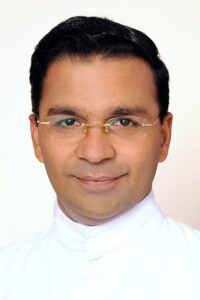
Dr. Dominic Vechoor, St. Thomas Apostolic Seminary, Vadavathoor
[1] Francis, Address to the Participants in the Plenary Meeting of the Congregation for the Eastern Churches, Friday 18 February 2022.
[2] For details see R. Taft, Eastern Rite Catholicism: Its Heritage and Vocation; V. Lossky, The Mystical Theology of the Eastern Church (London, 1973); J. Meyendorff, Byzantine Theology: Historical Trends and Doctrinal Themes (London, 1975); T. ŠPIDLÍK, Spirituality of the Christian East: A Systematic Handbook (Kalamazoo, 1986); R. Taft, ed. The Christian East: Its Institutions and Its Thought: A Critical Reflection OCA 251 (Rome, 1996); P. Pallath, ed. Catholic Eastern Churches: Heritage and Identity (Rome, 1994); R. Taft, “Eastern Catholic Theology: Slow Rebirth after a Long and Difficult Gestation”, Eastern Churches Journal 8 (2001), 51-80.
[3] John Paul II, Apostolic Constitution Sacri Canones, 18 October 1990, AAS 82 (1990), 1033-1044.
[4] S. BROCK, “The Syriac Orient: A Third ‘Lung’ for the Church?”, Orientalia Christiana Periodica 71 (2005), 5.
[5] E. Biser, “The Healing Power of Faith: Outline of a Therapeutic Theology”, Concilium 5 (1998), 68-78.
[6] A. Miklósházy, East Syriac Eucharistic Pneumatology (Rome, 1968), 8-9.
[7] J. Meyendorff, Byzantine Theology: Historical Trends and Theological Themes, 128.
[8] R. Taft, Eastern Rite Catholicism: Its Heritage and Vocation, 6.
[9] F. Nikolasch, “The Sacrament of Penance: Learning from the East”, Concilium 7: 1 (1971), 66.
[10] Pius XII, Radio Message on the occasion of the Centenary of St. Thomas the Apostle and St. Francis Xavier, 1952, 96-99.
[11] For details see, Leo XIII, Orientalium Dignitas, 1894; Pius XII, Orientalis Ecclesiae ,1944; Vatican II, UR, 14-18; LG, 13, 23; OE, 1-6; SC, 4; Congregation for the Eastern Churches, Instruction on Applying the Liturgical Prescriptions, 06 January 1996.
[12] R. Taft, Eastern Rite Catholicism: Its Heritage and Vocation (New York, 1963), 8-11.
[13] R. Taft, Eastern Rite Catholicism: Its Heritage and Vocation, 4.
[14] It is an umbrella term, which includes different ecclesial traditions, both Catholic and other Christian Churches, which venerate St. Thomas as their father in faith. The Syro Malabar and the Syro Malankara Churches belong to the Catholic communion of Churches. The Assyrian Church of the East, the Syrian Orthodox (the Jacobite Church), the Orthodox Syrian (the Orthodox Church), the Marthoma Syrian Church are the important branches of other Christian Churches of this tradition.
[15] P. Pallath, “Were the St. Thomas Christians in India Nestorians at the Time of the Synod of Diamper in 1599?”, Ephrem’s Theological Journal 5 (2001), 57.
[16] G. Nedungatt, “Spirituality of the Syro-Malabar Church”, 164-166.
[17] Annuario Pontificio, Vatican City, 2021, 1102-1110.
[18] Cfr. Syro Malabar Church Yearbook, 2018.
[19] P. Chittilapilly, “Eugene Cardinal Tisserant: The Visionary and Lover of Mar Thoma Margam’ in Mar Thoma Margam: The Ecclesial Heritage of the St. Thomas Christians, ed. A. Mekkattukunnel (Kottayam, 2012), 964-973.
[20] See also J. Ratzinger, Introduction to Christianity (London, 1969), 64.
[21] Cfr. Syro Malabar Holy Qurbana, Anaphora of Addai and Mari, The 4th prayer of inclination.
[22] Varthamanappusthakam is the first travelogue in Malayalam written by Paremmakkal Thomman Cathanar during the years 1785 -1786. It is also regarded as the first travelogue in any Indian language. It narrates the history of an adventurous journey undertaken by the author along with Joseph Cariattil from Malabar Coast to Rome via Lisbon and back that lasted for nearly eight years (1778-1786). This book is regarded as an account of the history of the Malabar Church between the years 1773 and 1786.
[23]T. Paremmakkal, The Varthamanppusthakam, translated by Placid J Podipara, OCA 190 (Rome, 1971), (Hereafter shortened to T. Paremmakkal, Varthamanppusthakam, Podipara), 29.
[24] Cfr. A. Thazhath, Law of Thomas (Kottayam, 1987).
[25] P. Kochappilly, “Mar Thoma Margam: A Theological Way” in The Way of Life, Festschrift in Honour of Prof, Dr. Varghese Pathikulangara CMI, ed. P. Kochappilly et al (Kottyam, 2011), 43-45.
[26] G. Nedungatt, “Spirituality of the Syro-Malabar Church”, 162.
[27] B. Petrà, “Church sui iuris, Ethos and Moral Theology”, 173.
[28] P. J. Podipara, “Hindu in Culture, Christian in Religion and Oriental in Worship”, Ostkirchliche Studien 8 (1959), 82-104.
[29] C.D. Sebastian, A Revisit into the Culture of the Early Syrian Christians of Kerala: Indian in Culture, not Hindu in Culture (Vadavathoor, 2020), 14, 77-104
[30] J. Kurukilamkatt, “The Apostolate of St. Thomas in India”, in Mar Thoma Margam: The Ecclesial Heritage of the St. Thomas Christians, ed. A. Mekattukunnel, (Vadavathoor, 2012), 744.
[31] Cfr. V. Pathikulangara, “General Charqcteristics and Sources of the Liturgy of the Saint Thomas Christians” in A. Mekkattukunnel, Mar Thoma Margam: The Ecclesial Heritage of the St. Thomas Christians (Vadavathoor, 2012), 225.
[32] Cfr. P. Pallath, “Inculturation among the St. Thomas Christians” in A. Mekkattukunnel, Mar Thoma Margam: The Ecclesial Heritage of the St. Thomas Christians (Vadavathoor, 2012), 840-852.
[33] J. Ratzinger, The Spirit of the Liturgy, 68-70; See also R. Sarah, The Power of Silence, 133.
[34] Syro Malabar Synodal Commission for Catechesis, The Liturgical Spirituality of the Syro Malabar Church, 231-244.
[35] Cfr. S. Chalackal, “Basic Orientations of the Christology of St. Thomas Christains” in Mar Thoma Margam: The Ecclesial Heritage of the St. Thomas Christians, ed. A. Mekattukunnel, (Vadavathoor, 2012), 87-96.
[36] Cf. J. Pulliurumbil, “Practice of Mar Thoma Margam in the Day-to-day Life of Mar Thoma Christians”, in Mar Thoma Margam: The Ecclesial Heritage of the St. Thomas Christians, ed. A. Mekattukunnel, (Vadavathoor, 2012) 709-719.
[37] Cfr. A. Chundelikatt, “Role of Family in the transmission of Faith and Morality”, in Mar Thoma Margam: The Ecclesial Heritage of the St. Thomas Christians, ed. A. Mekkattukunnel (Kottayam, 2012), 696-708.
[38] Cfr. M. Alapattumedayil, “ Canonized Holiness: Roman Catholic Syrian Christain Saints” in Mar Thoma Margam: The Ecclesial Heritage of the St. Thomas Christians, ed. A. Mekkattukunnel (Kottayam, 2012), 558-568.
[39] Cfr. G. Thadikkatt, “Seven Churches Founded by Apostle St. Thomas in India” in Mar Thoma Margam: The Ecclesial Heritage of the St. Thomas Christians, ed. A. Mekattukunnel, (Vadavathoor, 2012),749-755.
[40] Cfr. X. Kochuparammpil, “Missiology of the Thomas Christians” in Mar Thoma Margam: The Ecclesial Heritage of the St. Thomas Christians, ed. A. Mekkattukunnel (Kottayam, 2012), 168-169.
[41] Cfr. J. Kallarangatt, “Ecclesiological Perspectives of St. Thomas Christians” in Mar Thoma Margam: The Ecclesial Heritage of the St. Thomas Christians, ed. A. Mekkattukunnel (Kottayam, 2012), 139-154.
[42] Cfr. J. Thalachelloor & M. Madathikunnel, “Palliyogam among the St. Thomas Christains” in Mar Thoma Margam: The Ecclesial Heritage of the St. Thomas Christians, ed. A. Mekattukunnel, (Vadavathoor, 2012), 891-899.
[43] T. Paremmakkal, Varthamanppusthakam, Podipara, 131.
[44] Cfr. A. Mekkattukunnel, “Peshitta Bible in the Theological Tradition of St. Thomas Christians” in Mar Thoma Margam: The Ecclesial Heritage of the St. Thomas Christians, ed. A. Mekkattukunnel (Kottayam, 2012), 23-27.
[45] T. Paremmakkal, Varthamanppusthakam, Podipara, 247.
[46]Cfr. J. Vellian, “Margamkali: A Christian Folkdances of India Christian Performing Art”, in Mar Thoma Margam: The Ecclesial Heritage of the St. Thomas Christians, ed. A. Mekkattukunnel (Kottayam, 2012), 587.
[47] Cfr. J. Vazhuthanappally, “The Adoration of Mar Sliba among the Palaeo-Christians in India” in Mar Thoma Margam: The Ecclesial Heritage of the St. Thomas Christians, ed. A. Mekkattukunnel (Kottayam, 2012),359-367.
[48] Cfr. M. Thomas Antony, “Saint Thomas Cross, A Relgio-Cultural Logo of St. Thomas Christians” in The Way of Life, Festschrift in Honour of Prof, Dr. Varghese Pathikulangara CMI, ed. P. Kochappilly et al (Kottyam, 2011), 237-270.
[49] T. Paremmakkal, Varthamanppusthakam, Podipara, 81-82
[50] Cfr. A. Mattam, “Missionary Enterprises of the Church of St. Thomas Christains” in Mar Thoma Margam: The Ecclesial Heritage of the St. Thomas Christians, ed. A. Mekattukunnel, (Vadavathoor, 2012).
[51] Cfr. J. Powathil, “Ecumenical Endeavours among the St. Thomas Christians” in in Mar Thoma Margam: The Ecclesial Heritage of the St. Thomas Christians, ed. A. Mekattukunnel, (Vadavathoor, 2012), 206-216.
[52] Varthamanppusthakam, Chapter 34.
[53] P. Podipara, “Eugene Cardinal Tisserant, Reminiscences”, Christian Oreint 5, 1984, 53.
[54] Dicastery for Oriental Churches, Servizio Informazione Chiesa Orientale (S.I.C.O), 9, 1954, 60.
[55] X. Koodapuzha, “Eugene Cardinal Tisserant and Eastern Christianity in India”, Christian Orient 24, 2003, 29
[56] P. Podipara, “Eugene Cardinal Tisserant, Reminiscences”, Christian Orient 5, 1984, 53; See also X. Koodapuzha, “Eugene Cardinal Tisserant and Eastern Christianity in India”, Christian Orient 24, 2003, 27-29.
[57] Cfr. J. Pallikaparampil, “The Mar Thoma Margam and the St. Thomas Apostolic Seminanarty, Vadavathoor” in Mar Thoma Margam: The Ecclesial Heritage of the St. Thomas Christians, ed. A. Mekkattukunnel (Kottayam, 2012), 984-988.
[58] F. Eluvathinkal, “Development of the Syro Malabar Church toward a Global Identity: Challenges and Prospects” Thomas Christian Heritage 11, 21, 66-93.
[59] The Catholic Church in India is also a multi-ecclesial reality, a beautiful mosaic of the communion of three individual Churches or ecclesia sui iuris, Latin Church, Syro Malabar Church and Syro Malankara Church. Therefore, a pluralistic theological approach is to be developed in India on the basis of these three unique apostolic ecclesial traditions. Cfr. John Paul II, Letter to the Bishops in India, 1986.
[60] Cfr. J. Vettukallel, “Inculturation in a Global Context: Implications of Globalization for Inculturation in the Syro Malabar Church” Paper presented in the LRC seminar on “Inculturation in the Syro Malabar Church in the Context of Globalization”, Syro Malabar Major Archiepiscopal Curia, Mount St. Thomas , Kakkanadu, 9-10 March, 2020, 1-4.
[61] Cfr. G. Karakunnel, “The Inculturation of Christian Faith: Theology and Practice’, Paper presented in the LRC seminar on “Inculturation in the Syro Malabar Church in the Context of Globalization”, Syro Malabar Major Archiepiscopal Curia, Mount St. Thomas, Kakkanadu, 9-10 March, 2020, 1-11.
[62] P. Pallath, “Inculturation among the St. Thomas Christian”, 849.
[63] J. Meyendorff, “Two Visions of the Church: East and West on the Eve of Modern Times”, 451-452.
[64] R. Taft, “Eastern Catholic Theology: Slow Rebirth after a Long and Difficult Gestation”, Eastern Church’s Journal 8 (2001), 65.
[65] P. Pallath, ed. Catholic Eastern Churches: Heritage and Identity (Roma, 1994), 1-3.
[66] R. Murray, Symbols of Church and Kingdom (London, 1977), 347.
[67] John Paul II, Encyclical Letter Ut Unum Sint, 25 May 1995, AAS 87 (1995), 921-982, n. 28. See also Ecclesia in Asia, 25-27; Novo Millennio Ineunte, nos. 40, 43-45, 48.