


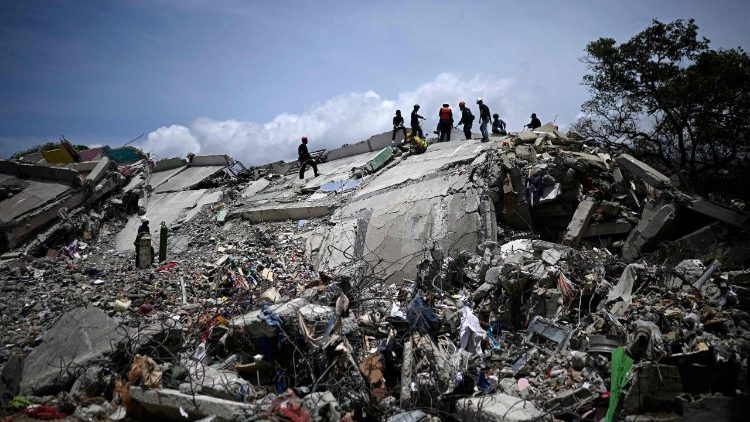
Fifteen days after the twin earthquakes that struck Venezuela on 24 June, the coastal city of La Guaira is still coming to terms with the scale of the destruction. Buildings lie in ruins, families wait for news of missing loved ones, and daily life has been upended. Father Antonio Rella, parish priest of Immaculate Heart of Mary Parish, describes scenes that feel both like war zones and apocalyptic landscapes, with entire blocks reduced to rubble. Access to many areas remains limited, making it hard to fully grasp the damage.
Amid the mourning, there is still hope. Father Rella points to the recent rescue of two sisters pulled alive from the debris as a sign that keeps families searching. But the uncertainty goes beyond grief. Water, food, and income have become daily worries. Some shops have reopened, but much of the local economy built around Maiquetía International Airport, the Port of La Guaira, and small businesses has collapsed. Many people still have a home, but no way to support themselves.
The Church has stepped into the gap. While Immaculate Heart of Mary Parish only suffered minor damage, nearby churches were not so fortunate. The cathedral was badly hit and several other parishes will have to be demolished. Because his church remained standing, Father Rella’s parish quickly became a hub for priests and a distribution center for aid to surrounding communities.
The response has been wide. Donations and volunteers have arrived from across Venezuela and from countries around the world. The first to mobilize, Father Rella notes, was Caritas Venezuela, whose parish and diocesan network helped cut through the initial confusion and get supplies moving. Medicines have been plentiful enough that the parish even set up a community medicine bank. Now the focus is shifting to food and safe drinking water, which remain the most urgent needs.
The hardest work, the priest says, is spiritual accompaniment. He recalls a grandmother searching for her granddaughter still trapped, and funeral Masses for victims including a one-year-old child. “Finding the right words to shed the light of faith on such a reality is no easy task,” he admits. Priests and lay ministers are also caring for pastoral workers who have suffered losses themselves.
Looking ahead, rebuilding churches is a priority, not just as buildings but as places where people can pray, grieve, and find consolation. Father Rella compares this moment to the Vargas mudslides of 1999 and says Venezuelans have shown resilience before. “This is not my first rodeo,” he says. He tells parishioners the church is their home, open to praise God, thank Him, or even argue with Him.
His final appeal is simple. As media attention fades and aid slows, he asks the world not to forget. “Never stop praying for Venezuela,” he says. “Not everyone can help materially, but a daily prayer for us is worth so much, because it reaches the throne of God, where it bears fruit.”
“Faith does not make things easy,” he adds. “It simply makes them possible, because it gives us the strength in our souls to keep moving forward.”