



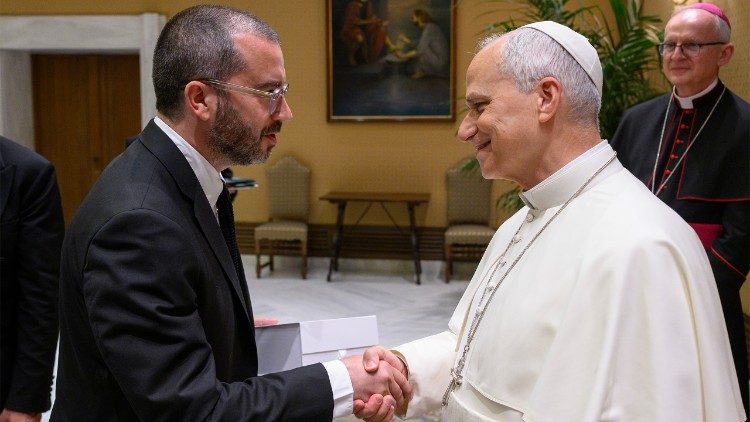
Speaking to Vatican News after meeting Pope Leo XIV at the Vatican Publishing House’s centenary celebration, American novelist Jonathan Safran Foer reflected on literature, truth, climate change, artificial intelligence, and the power of empathy. The June 24 gathering brought together dozens of authors from around the world. Quoting James Baldwin — “You think your pain and your heartbreak are unprecedented in the history of the world, but then you read” — Foer stood beneath Bernini’s Baldachin in St. Peter’s Basilica and spoke about the quiet intimacy between writer and reader. “What literature does, and James Baldwin has written about this really beautifully, is it reminds us that the things we feel most deeply don’t alienate us from other people.
They connect us to other people,” he said.In his address to the authors, Pope Leo XIV described writing as an act of truth and humanity, encouraging them to create spaces where empathy, dialogue, and hope can flourish. “Truth is not a territory to be defended, but a good to be shared,” he said, citing Magnifica Humanitas, 25.Foer recalled how his first novel — about a young Jewish American writer searching in Ukraine for the woman who saved his grandfather from the Nazis — taught him that art transcends difference. “I thought: who could possibly like this?” he said, imagining only readers like himself would connect with it. But many of those readers did not, while some of the strongest responses came from people halfway around the world. “They did not share a religion with me, did not share my generation, did not share a language with me.
It would seem that we had very few ways to communicate directly,” he explained. “But then art reminds us that the things we feel most deeply don’t care about all of those differences.”That ability to cross cultural, linguistic, and political boundaries, Foer said, gives literature a unique relationship with truth. He sees a deep responsibility for writers today, especially as public debate shifts. Speaking about the United States, he argued the problem is no longer competing truths, but “an unwillingness to accept that there is such a thing as truth. There is no shared reality.” While recognizing the value of personal belief, he warned against a culture where “we believe things without having reasons for them and without having evidence. They’re just our feelings, our gut.” For Foer, literature counters that trend by awakening empathy — a force he believes remains humanity’s greatest hope.