



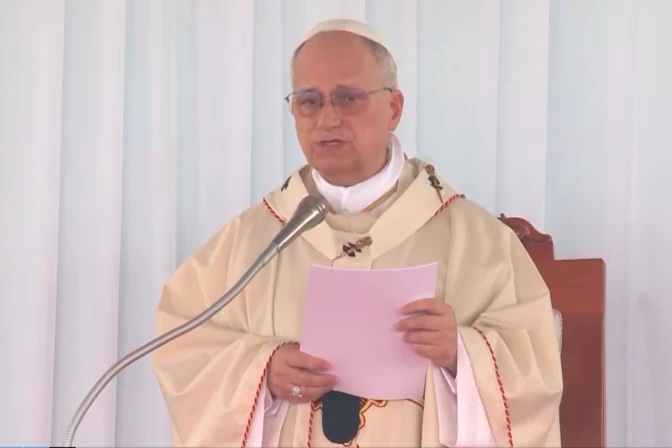
During his visit to Barcelona, Pope Leo XIV met on June 12 with participants of the Mediterranean Meeting MED26. The gathering, held in the Catalan capital from June 9 to 12, brought together more than 200 people, including 60 bishops, young people, and social workers from across the Mediterranean. Their goal was to reflect on regional challenges, promote interreligious dialogue, strengthen communion between the Churches, and involve new generations in building peace.
Father Alexis Leproux, general secretary of the Office of Ecclesial Coordination for the Mediterranean, COMED, said a “Mediterranean consciousness is beginning to take shape.” He noted this was the first time different networks worked together: the Assembly of Bishops, the network of theologians, and the School of Peace. “No challenge can be addressed by a single person, a single institution, or a single network,” he told. For Leproux, weaving “a network of networks” is essential for youth education and dialogue for peace, because “the Mediterranean demands that we move forward together, in a climate of fraternity between the shores.”The meeting’s conclusions will be made public soon as “concrete guidelines for moving forward.” Beyond consolidating existing collaboration in areas like welcoming migrants, monastic life, and theological reflection, participants also proposed creating a new network focused on communication.
Another major Mediterranean meeting is planned in two or three years to evaluate progress, while young people will continue meeting through upcoming sessions of the School of Peace.At the Archbishop’s Palace, Pope Leo XIV encouraged participants “to continue the work of building bridges between our shores.” In light of the region’s divisions, he said it is necessary to commit tirelessly to dialogue, mutual listening, and cooperation. “Faced with the numerous challenges of this region of the world, he also recalled the importance of opening an alternative path to competition and conflict: that of encounter, unity in diversity and friendship,” Leproux recalled.The coordinator stressed that the Catholic Church “does not want to remain closed in on itself.” It wants to work with all people of good will, from all cultures and faiths, in service to human dignity, the common good, and those in need. “That is the meaning of all these meetings: to care for one another,” he concluded.