


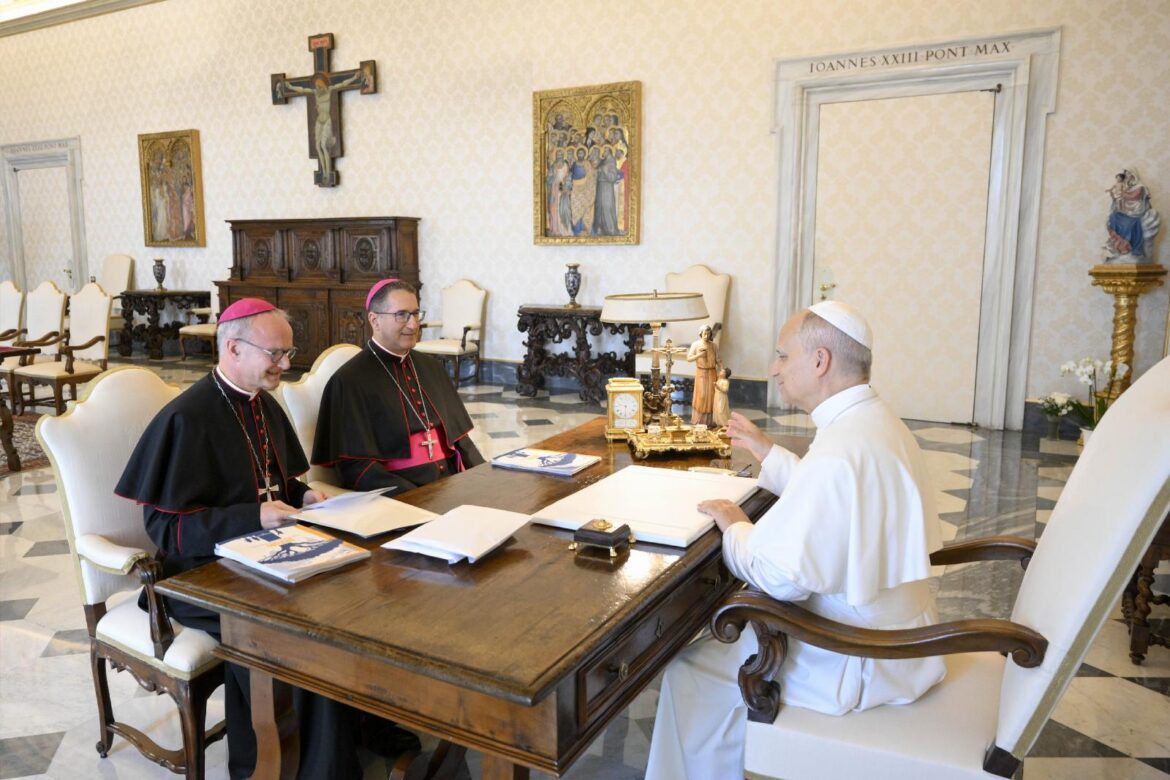
Pope Leo XIV has approved new statutes for the Pontifical Commission for the Protection of Minors that seek to balance its integration with the Roman Curia while preserving its independence. The updated statutes were published by the Vatican on June 13, 2026. They detail the commission’s role within the Dicastery for the Doctrine of the Faith, as mandated by Pope Francis’ 2022 apostolic constitution Praedicate Evangelium. However, while departments within a dicastery report to the pope via their prefects, the statutes state that “in matters within its competence, the commission reports directly to the Holy Father.”
According to the Vatican, the pope approved the statutes on May 20 during an audience with Cardinal Pietro Parolin, Vatican Secretary of State. They were adopted ad experimentum, or on a trial basis, for three years. In a statement, Archbishop Thibault Verny of Chambéry, the commission’s president, said the new statutes marked “an important step in deepening our shared responsibility to protect and care for the most vulnerable.” “They reflect listening to victims and survivors, to safeguarding experts, and to the experience of local Churches, and reaffirm that safeguarding remains a central priority,” he said. The commission noted the statutes replace those published in 2015 and offer a “clearer mandate” that clarifies its role as “one of guidance rather than governance.”
Among the responsibilities formalized is the PCPM’s role in ensuring the establishment of “stable and easily accessible systems for reporting abuse” in dioceses and eparchies worldwide. Those systems include listening and support centers offering spiritual, therapeutic, and psychological assistance. The statutes note that in the event of repeated failures by dioceses to establish such systems, the commission can “submit assessments and recommendations” to the relevant dicasteries “so that they can exercise their responsibilities.” The document also reiterates the commission’s responsibility in preparing its annual report, which assesses safeguarding procedures and protocols implemented by Vatican dicasteries and local churches. The report is submitted to the pope for approval before publication. “The commission may also submit recommendations to Dicastery Prefects, in coordination with the Secretariat of State, and, in cases of repeated violations or serious shortcomings in local safeguarding systems, may submit assessments directly to the competent dicastery,” the PCPM said.
The new statutes mark a milestone for the commission, which has faced criticism from former members and survivors over its lack of enforcement power. In a video message after publication, Archbishop Verny said the commission knows that “trust cannot be rebuilt by words alone” but requires “consistent action, humility and accountability.”