



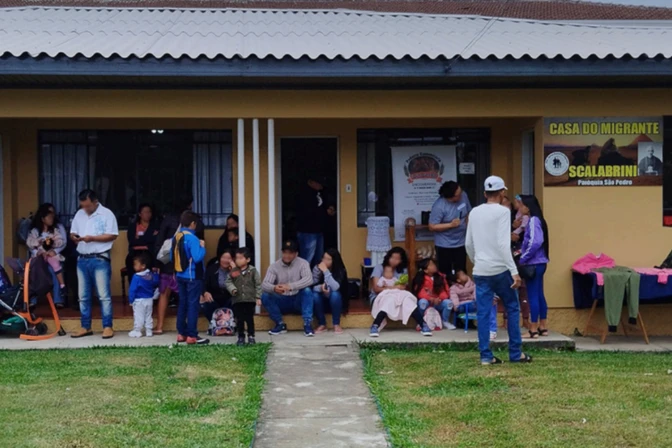
The Missionaries of St. Charles Borromeo, known as Scalabrinians, assisted 546,429 migrants and refugees across different regions of the world in 2025. They provided care through their network of shelters, care centers, and pastoral works dedicated to human mobility. According to their 2025 Annual Report, the congregation delivered this assistance through 52 houses and centers for migrants, plus 16 Centers for the Apostleship of the Sea. From those maritime centers they supported 70,588 maritime workers.
The Scalabrinian mission is carried out by 613 religious from 42 countries. They serve in 136 parishes and missions, 14 schools, seven study centers, three hospitals, and four homes for elderly missionaries. In 2025 the congregation also opened new missionary presences in Panama. Beyond shelter and pastoral care, the congregation distributed 354,429 hot meals to people in vulnerable situations. They also developed job training programs that benefited 25,033 people, aiming to “equip migrants with skills and support their entry into the labor market.”
In his letter accompanying the report, Fr. Leonir Chiarello, superior general, said the report is “not simply a compilation of activities, but the story of an ongoing mission, of a presence that seeks to remain faithful to both the Gospel and history.” He noted that more than a century after St. John Baptist Scalabrini’s death, the congregation’s charism still offers “a vision capable of seeing beyond fear, of recognizing in human mobility not only a challenge, but also an opportunity for encounter, renewal and communion.” Fr. Chiarello emphasized that the work does not fall only on priests and religious. It is also made possible by lay people who share the Scalabrinian charism. He called co-responsibility “one of the most significant expressions of our mission,” where people with different gifts participate in “building a Church that walks with migrants and allows itself to be transformed through encounters with them.” “Promoting means believing in the potential of each person and supporting processes of growth and autonomy. Integrating, ultimately, means building communities where diversity becomes a source of enrichment and an opportunity for encounter,” he stated. The superior general concluded by asking God to continue “sustaining our mission and making fruitful the service of the many missionaries and lay people who, every day, choose to be ‘migrants with migrants’.”