



Life history of many saints reveal that they have had a conversion in their life. They were not born perfect. They might have made many mistakes in their life and lived a sinful life before being converted. This is a good news for us; anyone, even a notorious sinner, can go through a conversion and become a saint. We may imagine that saints are ‘too holy’ and it is impossible for us to imitate them. But, in fact, most of them were simple people like most of us, struggling with addictions, oft repeated sins and bad habits. A deep and sincere conversion is what is needed.
Here are a few saints who have returned to God through a conversion:
St. Matthew
In the ancient Israel, no one liked paying taxes. During the first century the Romans subcontracted the job of collecting taxes to private individuals, and those tax collectors made use of the opportunity to extort as much money as possible from the people. Everyone hated the tax collectors, and their greed was well known to everyone.
That was the reason why many were astonished and scandalized, when Jesus asked Matthew to follow him. How could Jesus dine with “tax-collectors and sinners”? Matthew has been a new person from that moment. He followed Jesus very closely, and wrote down everything, and thus we have what we now call the “Gospel of Matthew.”
St. Dismas
You may not identify the saint by this name; but his other name is most popular among Christians, the “Good Thief” who was nailed to the cross next to that of Jesus. We know very little about him but we do know that Dismas’ crime merited crucifixion. According to one biblical scholar, “Two of the most common [criminals condemned to crucifixion] were low-life criminals and enemies of the state… Low-life criminals would include, for example, slaves who had escaped from their masters and committed a crime. If the slave is caught, he could be crucified. There were two reasons why they were subjected to such a tortuous, slow, and humiliating death. They were to get the ‘ultimate’ punishment for their crime and, possibly more important, they were being used as warning signals to any other slave who might be thinking of escaping or committing crimes.”
At the last hour, Dismas understood the severity of his crimes, and defended Jesus on the cross against the ridicule of the “bad thief,” “Have you no fear of God, for you are subject to the same condemnation. And indeed, we have been condemned justly, for the sentence we received corresponds to our crimes, but this man has done nothing criminal” (Luke 23:40-41). Jesus acknowledging his sincerity and repentance proclaimed, “Amen, I say to you, today you will be with me in Paradise.” After having led a sinful life, Dismas was granted forgiveness at the moment of his death.
St. Augustine
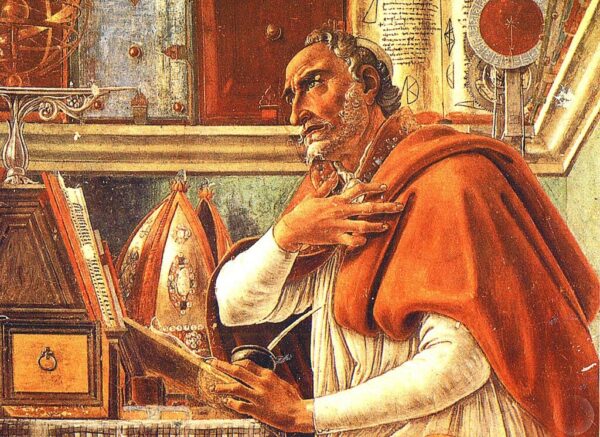
Augustine, though brought up by a Christian mother with deep faith, as young university student pursued the life style of Manichaeism. He got involved in an illicit relationship with a woman and had a son. Later he had a sincere conversion and put an end to the sinful relationship.
In his famous book, The Confessions, he narrates the incident using the image of “stealing of the pears”:
‘Fair were those pears, but not them did my wretched soul desire; for I had store of better, and those I gathered, only that I might steal. For, when gathered, I flung them away, my only feast therein being my own sin, which I was pleased to enjoy. For if aught of those pears came within my mouth, what sweetened it was the sin.’
After having a conversion of heart, Augustine was baptized, became a priest, bishop and after his death, “doctor of the Church.”
St. Pelagia
A fifth century actress and “loose woman”. Saint John Chrysostom told of her, “Nothing was more vile than she was, when she was on the stage.” Craughwell paints the picture of her sins well, “The men she took as her lovers became intoxicated with her. For Pelagia’s sake fathers abandoned their children, wealthy men squandered their estates. She even seduced the empress’s brother. Trying to account for Pelagia’s power over men, St. John wondered if she drugged them, and speculated that perhaps she used sorcery.”
She has been converted to faith after listening to the homily of a bishop about God’s mercy. It is believed that she then became a nun and spent the rest of her days in prayer.
St. Mary of Egypt
At a young age Mary absconded from home and spent seventeen years of sinful life in the glamorous city of Alexandria during the fourth century. She did not charge for her services, but enjoyed the challenge of seducing young men. She was enthralled with “sexual adventure” and was led by her passions. Mary later confessed, “There is no mentionable or unmentionable depravity of which I was not their teacher.”
A group of pilgrims on their way to Jerusalem in a ship were seduced by her before they reached their destination. However, while in the Holy City, Mary repented over her sins and was reconciled with the Church.
She spent the rest of her life as a hermit in the desert, and continually fought against temptations to turn away from her immorality until God granted her peace of soul.