



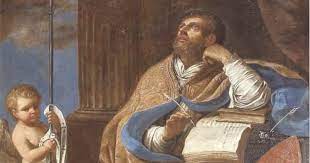
The name Chrysologus signifies “golden speech” in Greek. He was a Doctor of the Church in 1729, he is distinguished as the “Doctor of Homilies” for the concise but theologically rich reflections he delivered during his time as the Bishop of Ravenna.
His works are a testimony to the Church’s traditional beliefs about Mary’s perpetual virginity, the penitential value of Lent, Christ’s Eucharistic presence, and the primacy of St. Peter and his successors in the Church.
He was born in the Italian town of Imola in either the late fourth or early fifth century. But sources differ as to whether this occurred around 380 or as late as 406.
Following his study of theology, Peter was ordained to the diaconate by Imola’s local bishop Cornelius, whom he greatly admired and regarded as his spiritual father. Cornelius not only ordained Peter but taught him the value of humility and self-denial.
The lessons of his mentor inspired Peter to live as a monk for many years, embracing a lifestyle of asceticism, simplicity, and prayer. His simple monastic life came to an end, however, after the death of Archbishop John of Ravenna in 430.
In Ravenna, Peter was received warmly by the Western Roman Emperor Valentinian III, and his mother Galla Placidia. She is said to have given him the title of “Chrysologus” because of his preaching skills.
One of the major heresies of his age, monophysitism, held that Christ did not possess a distinct human nature in union with his eternal divine nature. Peter laboured to prevent the westward spread of this error, promoted from Constantinople by the monk Eutyches.
The Archbishop of Ravenna also made improvements to the city’s cathedral and built several new churches. Near the end of his life, he addressed a significant letter to Eutyches, stressing the Pope’s authority in the monophysite controversy.
Having returned to Imola in anticipation of his death, St. Peter Chrysologus died in 450, one year before the Church’s official condemnation of monophysitism. He is credited as the author of around 176 surviving homilies, which contributed to his later proclamation as a Doctor of the Church.